Exodus — The Colombia Edition
Stranded at the far end of Boyacá with every bus full, and a Passover meal 500km away. Twenty-six hours to get there.
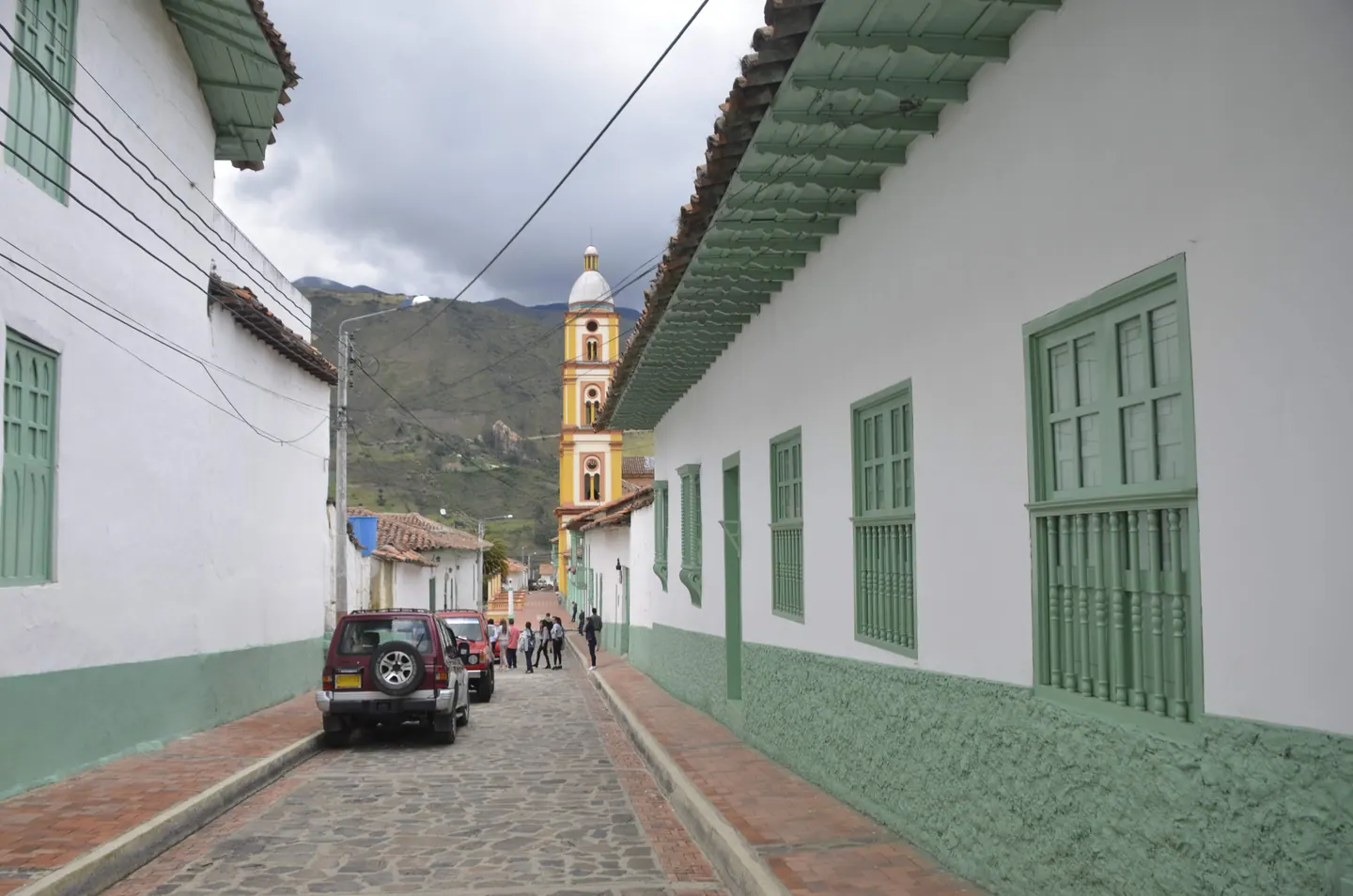
This road story is about the Boyacá province next to Bogotá. Want to know more? Click here for the full guide.
Bogotá, Colombia, a week before the Passover Seder, 2019
I’m sitting on the comfortable hostel sofa with a few travellers from all over the world. I have a few days to travel and get back for the Seder — the Passover meal — that I’d booked in advance in the city.
I consult the others, and especially a Colombian guy who’s drawing everyone’s attention with his stories. He tells me about the neighbouring province of Boyacá and its distinctive villages, which connects with what I’d read that morning about El Cocuy, a national park with treks at the far end of Boyacá.
After a long day of planning I settle on a route and decide that tomorrow I’ll head out for five days in the province: two days in the villages, one day getting to the national park, and two days hiking there.
I set off. Boyacá is extraordinary and the people in it more so. The Salt Cathedral, the village of Villa de Leyva and its surroundings — the village stage goes very well, and after two days I begin the eight-hour journey to the eastern edge where the national park is.
Enjoying myself, I slightly miss the planned schedule and get on buses a little later than intended. But as I discovered on the trip, everything happens for a reason. I arrive at a village halfway along that I should have reached much earlier, and there at the bus counter I ask the ticket seller how to get to El Cocuy. At exactly that moment I feel a hand on my shoulder, and find an adventurous German woman asking whether she heard the words “El Cocuy” correctly. I tell her she did, and very quickly we join forces and decide, on the ticket seller’s advice, not to waste time and to head straight for the small town of Soatá, where at dawn we’ll be picked up for El Cocuy.
So we get on the bus, and on the way I check things over with my German partner and discover I’d been a little naive. The national park limits the number of hikers per day and you need to arrange a lot of things in advance — she, for example, already has a guide waiting for her there.
She says she’ll help me, and optimistically I say everything will be fine.
Morning comes, and with it the minibus to El Cocuy — an experience in itself. Five hours through rural Colombia, remote villages and untouched landscapes.
Along the way local farmers get on and sell their village neighbours the things they produce, and we enjoy Colombian village prices and stuff ourselves the whole way.
After long hours, towards evening, we arrive in El Cocuy. It’s Tuesday evening. On Friday, the Seder is waiting for me.
My travel partner and I arrive at a welcoming hostel, where an important detail enters the plot — something I’d already noticed in the villages but hadn’t thought would affect me. This week isn’t only Passover, it’s also Christian Easter, which means all the Colombians are on holiday. They mostly travel within Colombia, and that creates a crush here in El Cocuy too.
Wednesday morning I start early and with purpose, realising I have to find a guide and a route and get things moving.
The German woman’s guide tells me they’re going to do a route that’s already fully booked. The government has limited visits to three routes only, and only to a certain number of people per day.
My German partner is out of the equation. I’m left alone in the picture.
I get to the park offices the moment they open, to work out what I’m going to do. After all this long journey, how do I actually get out into the park?
In the office I find slightly dispirited clerks who don’t give me the time of day, but I don’t let it get to me. I persist several times, and then they tell me about three Dutch people heading out tomorrow, and that if I persuade them I could try to join. The Dutch are currently in a safety briefing in an adjacent room, and when they come out I’ll be able to talk to them.
After half an hour of nail-biting, the Dutch come out. Luckily I’ve landed well and we connect immediately. They’re pleased that I speak Spanish, because the guide barely speaks English, and we decide to join forces. Tomorrow we head out together.
After a bit more irritating bureaucracy I get the trip sorted, and then go to sort out one last thing: a bus on Thursday evening after the trek back to Bogotá, back to the Seder.
I get to the travel office and ask to book a ticket. The clerk tries to hold it in, but in the end she laughs a little. She tells me there are no buses until Saturday. It’s Easter week. Everything is full.
El Cocuy is a small place, and although I knew the agency I’d asked had both the companies that go to Bogotá, I go on to another office and look for salvation there. The same answer: there’s only space on Saturday.
Quite a slap. I’d crossed half a country, paid money for permits and a guide, and I’m stuck here with no way of getting back for the Seder.
I’m not religious, but Passover has always been very important to me. Tradition — especially abroad.
Not really knowing what to do, I go back to the hostel helpless, try to pull something out of the improvisation notebook I’d built up over months of travelling alone, and ask the experienced hostel manager whether it’s possible to get there by hitchhiking. He says no. No chance, not in such a short time.
Night is already falling on the village. Tomorrow I head out on a challenging trek at four in the morning with the Dutch. I realise there’s nothing I can do right now, and go to sleep.
Four in the morning, Thursday. A jeep picks me up and we start climbing to the villages in the mountains above the village. After an hour we reach a guesthouse for breakfast, where I meet the Dutch and my guide. I forget the trouble and fill with excitement for the adventure waiting for us today: a trek to a glacier.
We start walking. Extraordinary landscapes. For moments it feels as though I’ve gone back to the start of the trip and I’m in Patagonia after all.
A challenging climb and a drop in temperature, and after several hard hours of walking we reach El Púlpito — an impressive, snow-covered stone column. A fitting finale to an excellent trip.
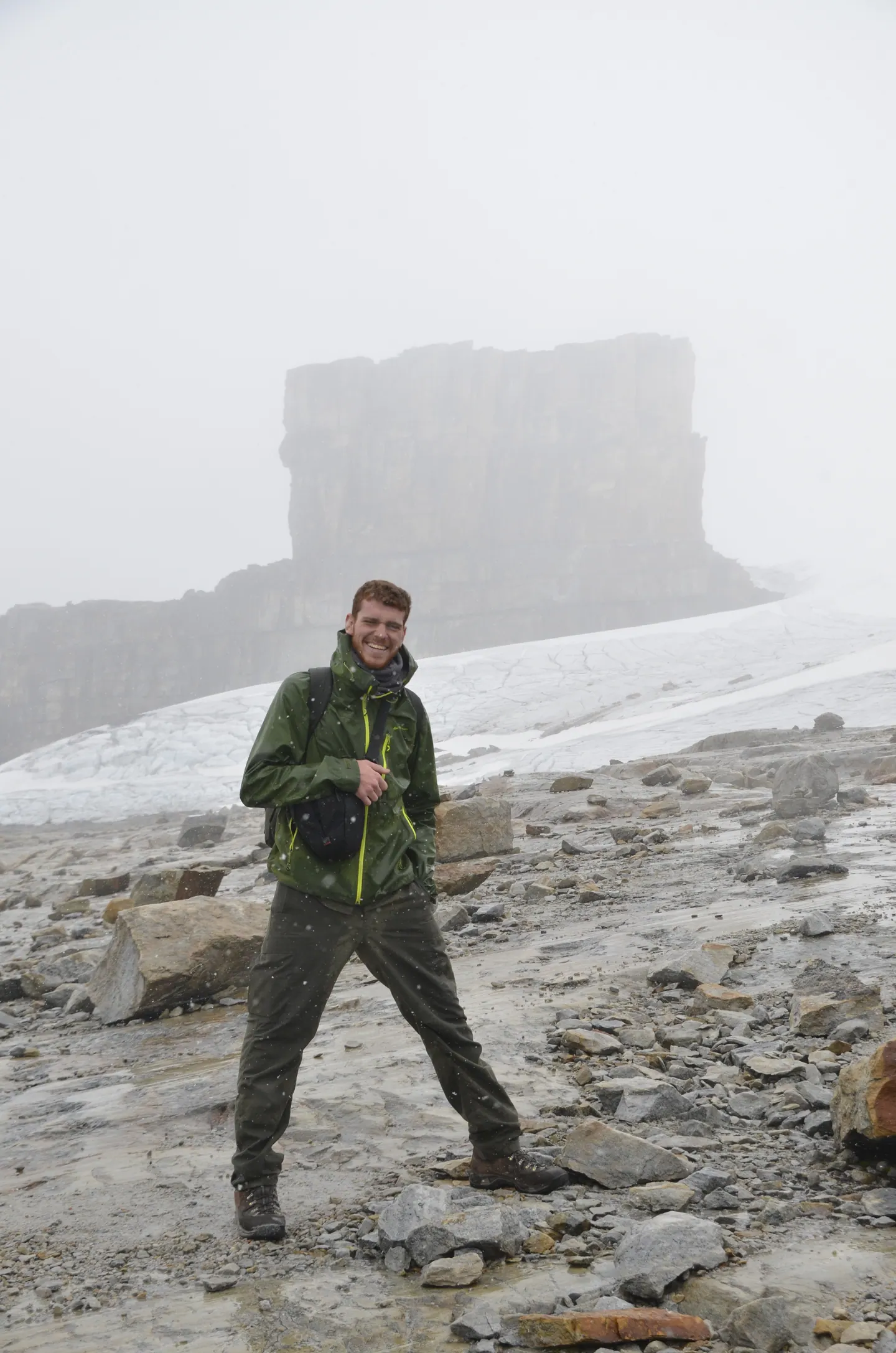
From there the real journey begins. I tell my Dutch friends about the situation and my dilemmas, and on the way down, in an amusing gesture, we decide to re-enact the burning bush. Which gives me motivation. I’m going to perform a miracle here. I’ll get to Bogotá for the Seder.
Thursday, five o’clock. We get back to El Cocuy village. There’s no time to waste. I run to the hostel and grab my bags.
On the way out of the hostel an idea strikes me. It’s Easter, there are lots of people travelling, and a lot of them come from Bogotá. Maybe I can find a family with a car heading that way.
The hostel manager, always glad to help, makes a few phone calls and tells me she hasn’t found anything, but that I should go to the village’s big hotel a few streets away.
I start running and reach reception, where I discover my idea genuinely was a good one — but with the wrong timing. Half an hour ago a family with plenty of free space left straight for Bogotá.
Too little, too late.
But precisely because I’d come so close, despair turned in a moment into hope. I’m going to hitchhike. Somebody must be going to Bogotá.
I put the gear on my back and start walking to the edge of the village. After two kilometres I stop on the main road, put on some music to pass the time, and wait with my thumb up, hitching.
Evening is starting to come down and I tell myself that if I don’t make progress before dark, I’ll go back to the village.
After half an hour a nice family stops for me. I ask where they’re going and they tell me the nearest village. That’s progress of 10km on a winding 500km journey, but I decide I have to move forward, and get in with them.
During the few minutes of the drive I tell them I’m trying to hitchhike to Bogotá, and they tell me I’m a gringo loco. I smile, and agree.
Those few minutes didn’t really move me closer to Bogotá physically, but they gave me the feeling that from here there’s no way back. From here I only carry on towards Bogotá.
After a few minutes in the second village the bet pays off, and a lift takes me on to Guacamayas.
I arrive in the village and recognise it: it’s one of the bus stops on the way to El Cocuy. A bigger, more central village. Maybe salvation will come from here?
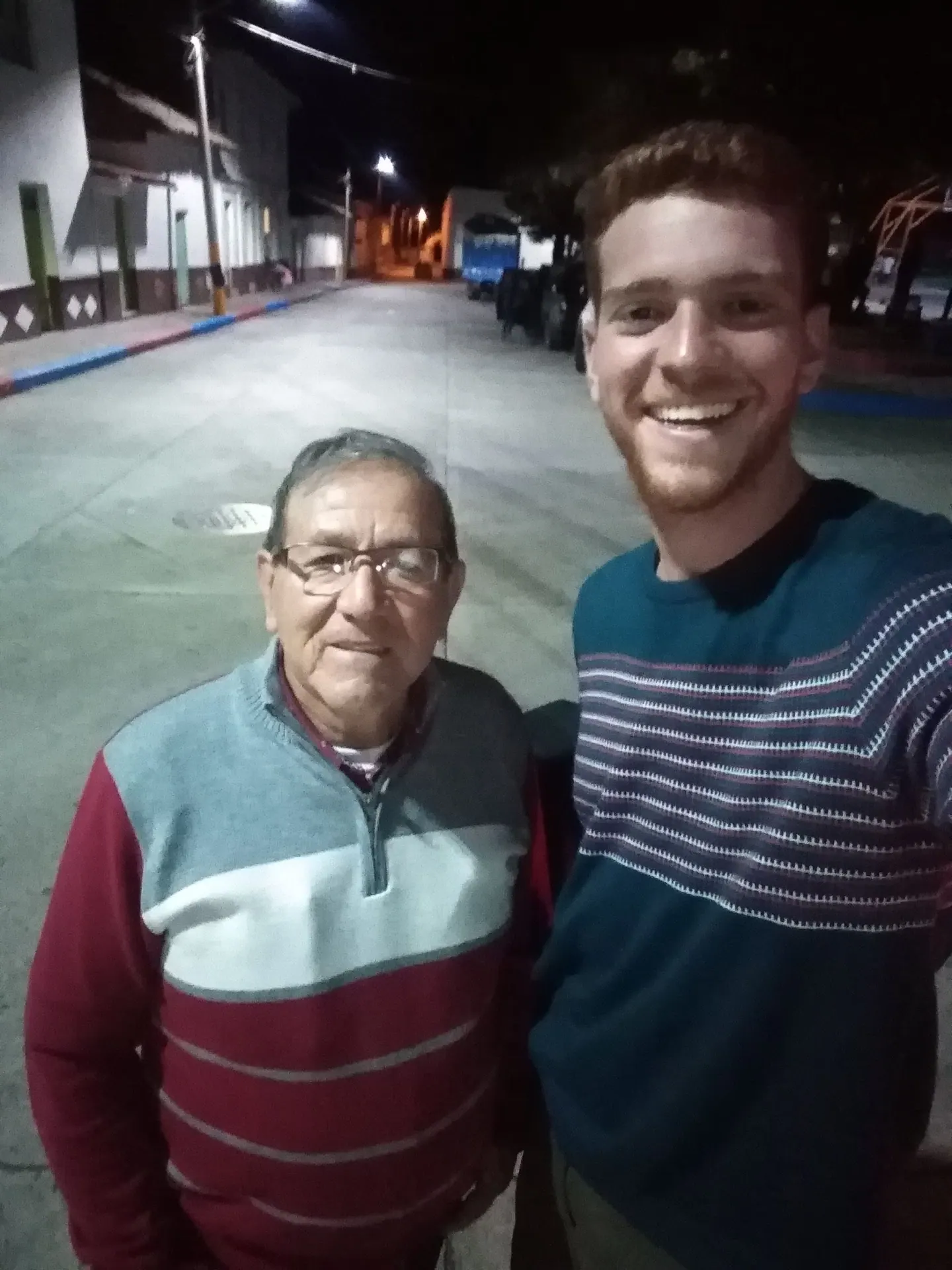
The driver drops me off late in the evening and tells me that if there is such a salvation, it’s called Alberto. Don Alberto.
He owns the village hostel, which is also the village kiosk, which is essentially the beating heart of the village. Alberto knows everyone and everyone knows him.
Despite the late hour I tell Alberto my story. At first, like a good salesman, he tries to tell me to stay with him at the hostel. I politely refuse and explain that I want to get to Bogotá.
Alberto isn’t fazed and immediately throws himself into the task. It starts with a few enquiries and phone calls, after which we go out to the park and ask passers-by. Nobody gives a positive answer, but simply walking around with Don Alberto like a celebrity in the village made me forget all the exhaustion and the trouble for a moment.
After an hour of searching, by which point we’d moved on to knocking on doors, the effort paid off.
Somebody can take me to Soatá.
Hold on — Soatá. What’s the excitement? It only sounds a bit like Bogotá, but it’s still more than five hours away from it.
The excitement about Soatá is that it’s an enormous road junction. It’s a town, not a village, and there it should be easier to sort something out.
At midnight, on a day that began somewhere around four in the morning climbing a glacier, I arrive optimistic in the small town of Soatá.
The driver drops me at the junction in the town centre, a place I know from the way out.
I wait a few minutes and see no movement. Mostly I see the town’s two hotels winking at me, but deep down I know I’ve been through this whole journey, and going to sleep now would hurt my chances of getting to Bogotá in time.
While looking for information I come to the only thing open around the junction: a nice sausage shop serving the drivers 24/7. I ask about the buses, and the manager hurries to inform me that the buses are the same buses that leave from El Cocuy village. They’re all full.
I give him a disappointed look and he asks how I got here. I tell him the story, and from there it’s all history.
He leaves his work, and jumps on every bus or car that passes. For one moment, while he’s talking to a bus driver, I see a truck stopping to eat. I approach the driver and ask where he’s going, and then the magic word sounds: Bogotá.
I see the driver is alone in the truck and ask if I can join him. He tells me he’d do it gladly, but he has a sensor that measures the weight on the vehicle and they’d know he was taking another person with him. Since when did Colombians become so sophisticated, God knows.
I give up and go and sit in the bus area, talking to every driver who passes and looking for help.
Our truck driver, meanwhile, stops to eat at the sausage stand, and there the manager urges him throughout the whole meal — without me noticing at all — that he has to help me, and doesn’t leave him alone for a second.
The driver comes to leave and I, already half asleep on the pavement, suddenly hear shouting from the other side of the junction. Gringooo! Gringoooo! I lift my head and see the shop manager and the truck driver calling me. He’d done it. He’d persuaded the driver. I’m on my way to Bogotá.
That’s the end of the story, but the drive itself is a story of its own.
I get in completely spent and I’m already imagining how I’m going to fall asleep, but then two things happen that don’t let me sleep.
The first is that the driver tells me heroically about his ability to drive whole days across the whole of Colombia with almost no sleep, and how that way he earns more money and more time with his family. God help us.
The second is that this driver is one of the most interesting people I’ve met. He sings salsa at the top of his voice and takes pride in it. I ask him what the story is, and he tells me that his brother is the singer we’re listening to right now: Danny Daniel, one of the most famous salsa singers in Colombia.
So I realise I can’t close an eye out of worry, and seven hours of driving pass like that, in which the driver is unusually enthusiastic about the songs and the quiet that’s left, I’m enthusiastic about his singer brother, and there are plenty more stories about each of our lives.
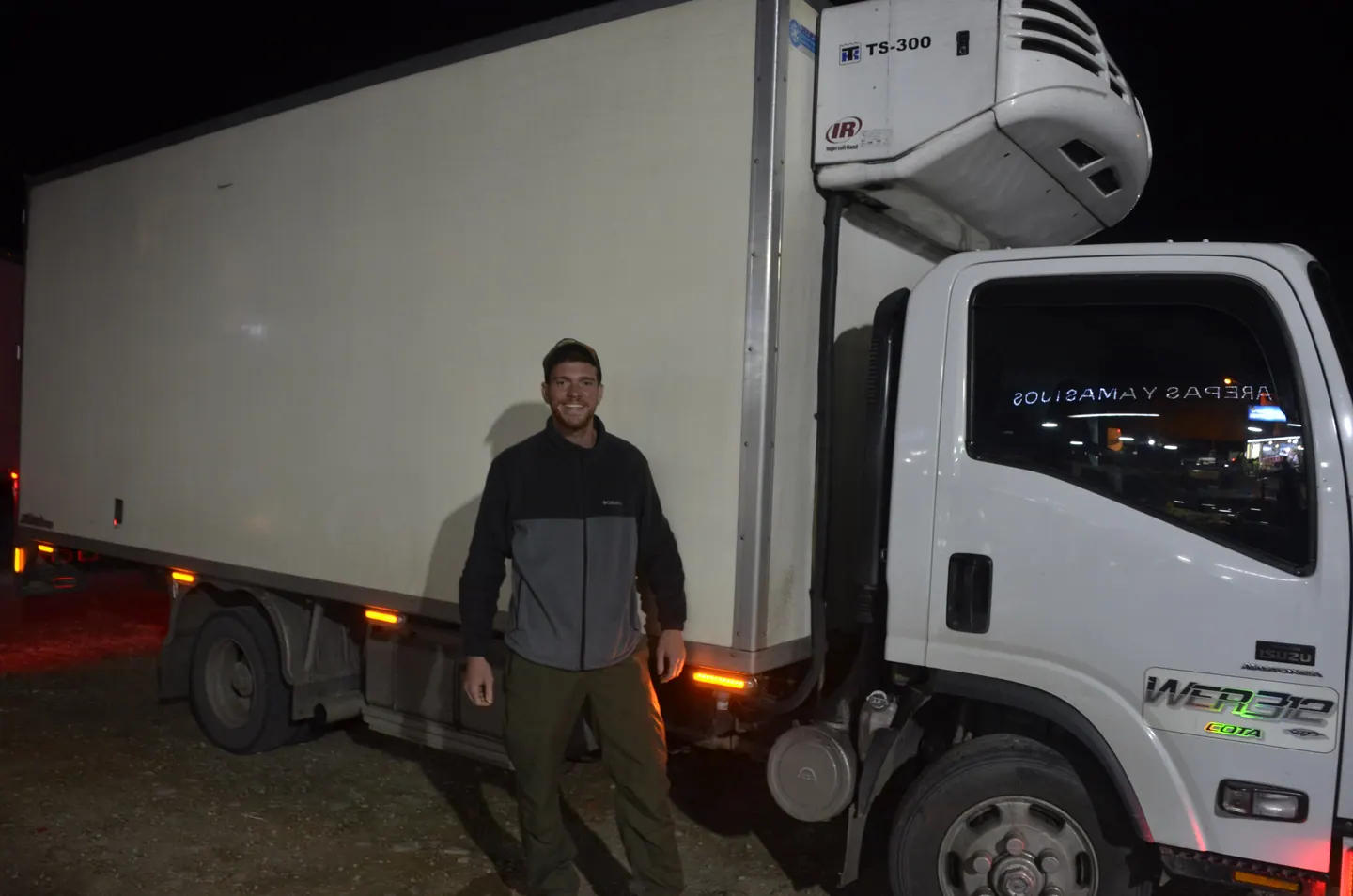
Six in the morning. I arrive in Bogotá. Twenty-six hours awake, and you’ve already heard what they contained.
I go to sleep at the hostel and wake up straight into the Seder in Bogotá.
And there, inside the synagogue, I sit around the Seder table with a satisfied face and sing the question that opens the night:
“Why is this night different from all other nights?”
So what do we take from this road story?
Believe in the road. Be optimistic and keep a smile on your face, and the impossible will happen.
Be careful. Don’t get into every lift. I didn’t go into it here, but I also turned down several lifts along the way, even though I was desperate.
Be flexible. If you’ve found a partner who’ll be with you on a route that isn’t full of tourists, sometimes it’s worth changing plans. Even though in the end I didn’t do the trek with the German woman, I got to El Cocuy in time and managed to do the trek.
Boyacá is an extraordinary place with landscapes and people with hearts of gold. You can read more about the attractions and villages in the province — click here.