The Homeless Carnival
Three days at the northern Argentina carnival with a tent and nowhere to sleep. Devils, a bridge, a locked gate.
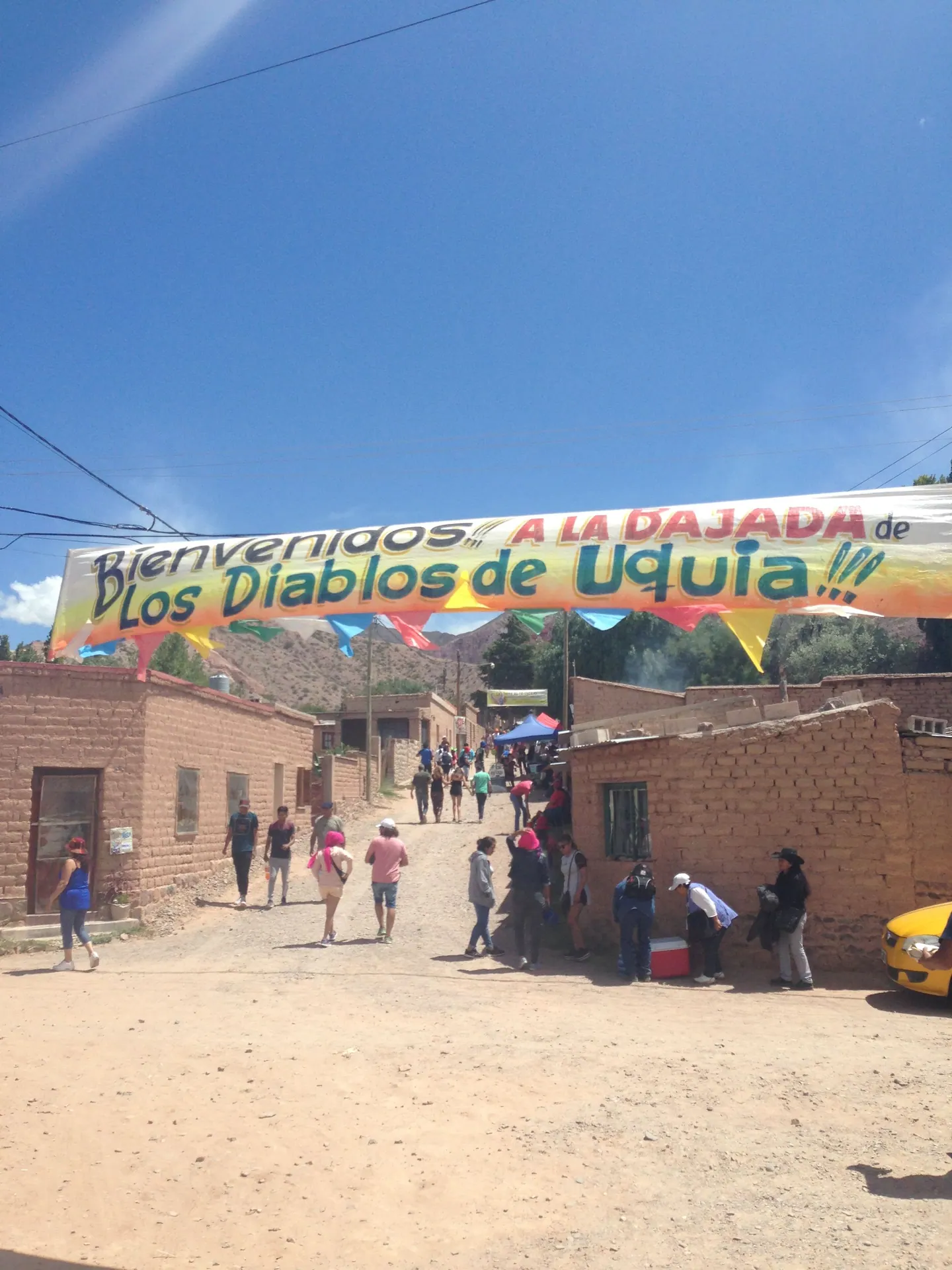
Northern Argentina — February 2019
Humahuaca, a village in northern Argentina. I’m in a car with four other Israeli friends. Over the last few days we’ve been travelling by car and getting to know the extraordinary province of northern Argentina.
In these days, beyond the breathtaking landscapes, what I connect with most is the culture, the simplicity and the joy of the people. And as the days pass I remember that back home I’d read about a carnival held in northern Argentina, and discover it starts in a few days’ time. And so these days pass and I get out of the car with a tent, a camera and a bag on my back, say goodbye to my Israeli friends, and I’m ready to discover the carnival of northern Argentina. Alone.
I begin the journey the day before the carnival starts, at a hostel I’d already stayed in a few days earlier, where I know the owner.
I get to the owner and she asks after my friends. I tell her I’ve come alone and would be glad of a room. She laughs at me and tells me there isn’t a single free room the day before the carnival — but after a few moments of thought and the helpless look she gets from me, she asks whether I have a mat and a sleeping bag. I tell her I do, and find myself paying for a room and sleeping in a dusty library in the hostel’s back yard. Lovely.
In the evening I go out to the village’s main square to get a feel for the carnival, and find that where a few days ago there was nothing, the carnival’s main stage is already up, and young Argentines are slowly starting to fill the place with supplies of wine, cola and Fernet, the famous drink from Córdoba.
For the first hour I’m in culture shock, watching old women and groups of children playing flutes out of tune and wondering to myself what I’m doing here. I realise this is the evening before the carnival begins and I’m about to give up and go to sleep in the hope of a better tomorrow — but a moment before I go, I force myself to try to connect with people and understand what’s happening here.
A few moments later a group of young Argentines passes in front of me with a strange jug, and I seize the opportunity, asking them what’s inside it. Very quickly I discover I’ve landed on a cool group of young people who love Israel. As the saying goes: don’t look at the jug, look at what’s inside it.
And that’s how the first evening passes, and I already find myself drunk, singing and dancing to the sound of the flute — which with a bit of wine sounds a great deal better. I go back to “the suite” and lie down on my sleeping bag at three in the morning.
Monday morning. After a few lonely hours of sleep and a headache, I wake up with a sense of mission and don’t let the exhaustion affect me. Today the carnival really begins and I don’t want to stay in bed because of the night before. I leave the hostel and walk to the main square, where my friends from yesterday said we’d meet at midday and go together to a small village called Uquía, where today’s great opening ceremony of the carnival is held.
I arrive at the square completely spent, with a piece of bread I’d bought in my hand, and discover that my friends from yesterday are rather less mission-driven than me and haven’t shown up. Part of me is disappointed, but a large part is glad, because I’m not really in ideal shape, and so I spend another hour in the square glued to a water bottle and a piece of bread. It might sound like I was in a strange state, but I was in very good shape compared to the other young people, who as far as I could tell hadn’t been to sleep at all since yesterday.
After an hour of recovering I gather my strength again and start walking to the edge of the village, where I try to hitch a lift. Plenty of cars pass, but only after an hour does a nice guy stop and move me a few kilometres on to my destination — the village of Uquía.
The moment you arrive in Uquía on the day of the carnival, you understand something big is about to happen.
Hours before the ceremony starts the road is already jammed with cars, and thousands of people are flowing into this small village of fewer than a thousand residents.
I talk to the locals and understand there are still several good hours until the carnival begins, so I seize the opportunity: I talk to a nice family next to me who look after my gear, and grab a nap under a tree.
Two hours later I wake to the noise of drums and my heart starts pounding. The carnival is about to begin.
I start walking towards the mountain behind the village where the carnival happens, and on the way realise I’m stuck with a backpack and a tent. I meet a nice local — God knows why I trust him — and leave my things at his house.
Music slowly starts playing and people flow into the dirt ground behind the village, a small area which within an hour fills with thousands, if not tens of thousands, of people. An extraordinary sight.
And then the moment we’d gathered for arrives. The locals, the residents of Uquía, appear up on the mountain, dressed in traditional costumes — parents and children, old and young — and they all begin their way down to the shouts of the revellers, who cheer only for whoever rolls and takes a serious beating. Funny and surreal at the same time.
As the costumed villagers get closer the music grows louder, the foam and paint people are spraying at each other intensifies every moment, and alcohol flows from every direction.
I’m still traumatised from yesterday and refuse to drink, but the truth is you don’t need to. The atmosphere is so electrifying that you feel like you’re in the clouds with nothing at all.
And so the carnival begins. The villagers costumed as devils have already mixed with the thousands of dancers and everyone dances together to a few improvised giant speakers. So simple, and so enjoyable and distinctive. A once-in-a-lifetime party.
After hours of foam, paint and dancing, people slowly start to disperse, and I decide to leave early to plan the next stage of the carnival madness.
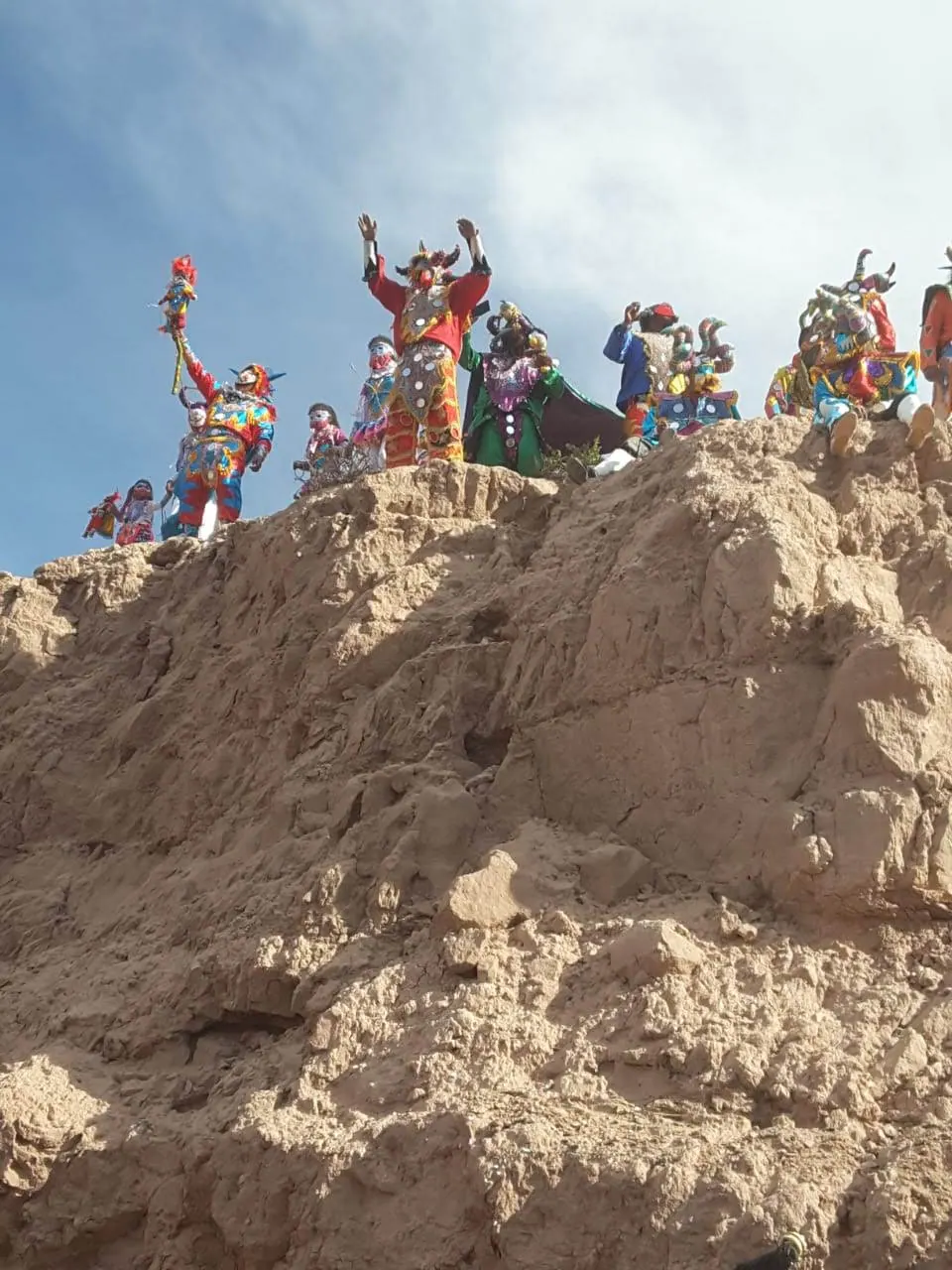
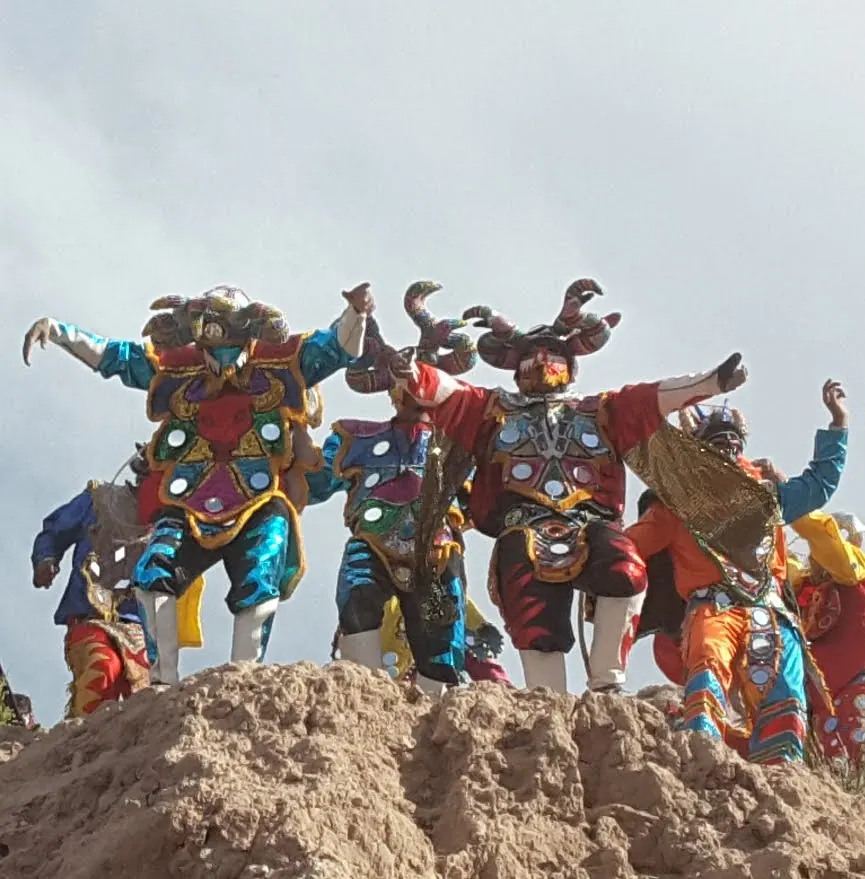
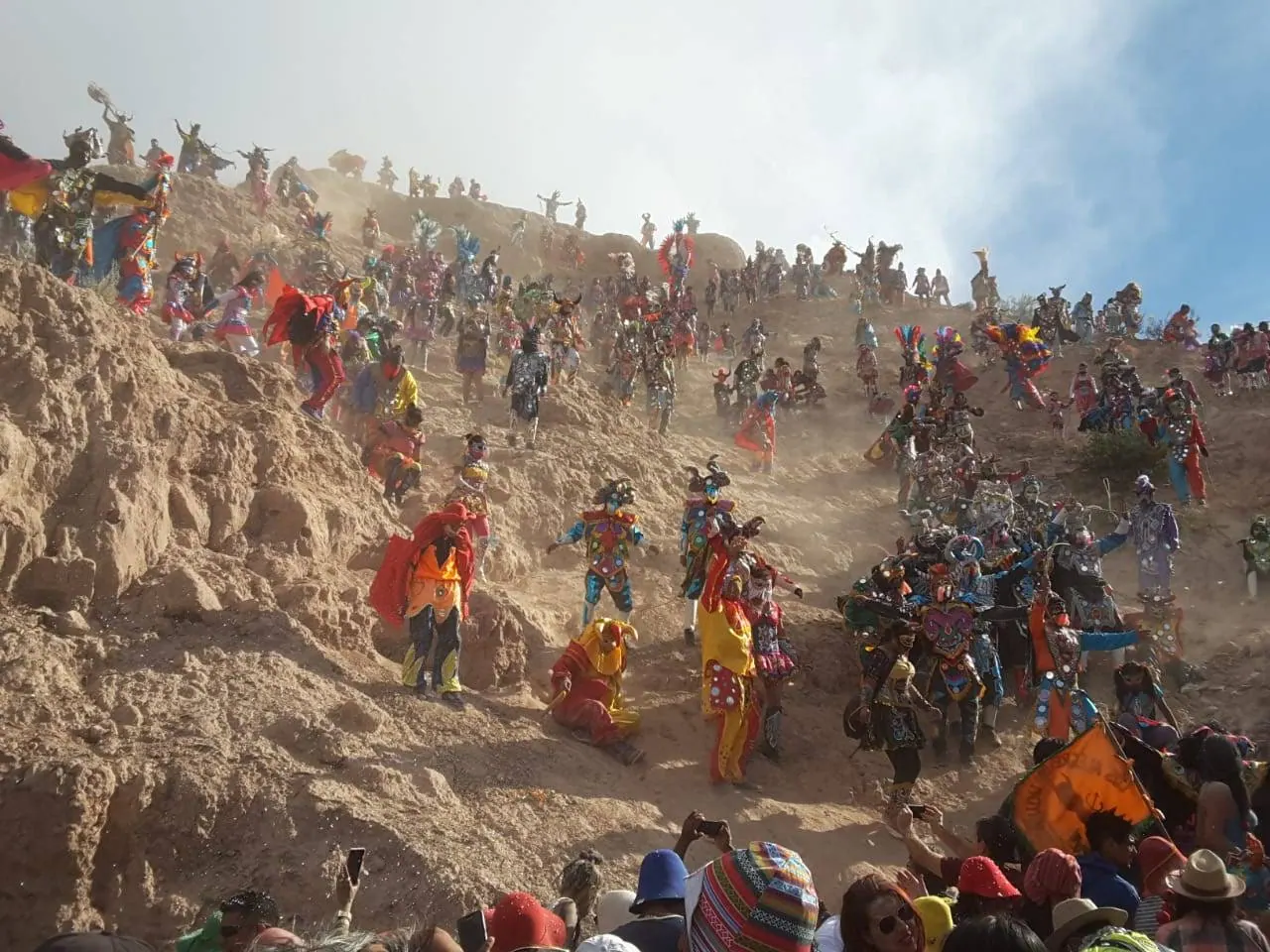
The Uquía carnival in pictures.
I leave the village for the main road and put my thumb up heading south, trying to get to the second-largest village in the area, Tilcara, which also holds a colourful carnival.
After half an hour of searching and getting talking to a great Mexican guy, together we find a lovely older couple who are happy to take us with them. The drive is very slow because of the crowds and the traffic, and in that time I discover that the couple have connections and many friends in the Jewish community, and we get on very well.
During the conversation I also hear from them for the first time about the carnival in Jujuy — a music festival in the big city, far from the madness of the villages.
They tell me about an organised carnival and a camping area with lots of young people. I decide to leave my Mexican friend and stay with them, leaving behind the madness of the villages and carrying on to the big city, Jujuy.
The drive takes far longer because of the traffic and we only reach Jujuy after five hours. (It’s an hour’s drive.)
The older couple say goodbye with a smile and drop me at 11pm at the carnival. I can hear the performances already starting and I’m very excited. All that’s left is to get to the young people’s camping area they told me about and start enjoying myself.
Or so I thought. Full of confidence, I go up to one of the carnival staff with my tent and sleeping bag in hand and ask where exactly the camping area is. He tells me he doesn’t know what I’m talking about. There’s no such thing.
I start to worry, but check with a few more organisers, and only then does the penny drop. There’s no such area, I’m alone in the city — and here an important detail enters the picture. The city isn’t especially large, and during the carnival there isn’t a single free room or bed in it. Zero. Nada.
So I started the day with a hangover, carried on to a mad party with devils coming down a mountain, and now I’m in a city with a sleeping bag and a mat and nowhere to sleep. As they say: the only way from here is up.
In one last desperate attempt I go with a taxi driver and we go round every hotel and hostel I can find in the central area. Booking wasn’t lying. There’s nowhere.
One in the morning. I wander the streets of Jujuy and reach the central park, and there, with a sleeping bag and mat in hand, I realise I don’t have many options. In a desperate move I put up a tent under a bridge, which protects me from the wind but brings unpleasant smells with it. Deep down I’m so exhausted that nothing will stop me. I lock the tent from the inside and close my eyes. Goodnight, carnival.
Seven in the morning. The tent is shaking. I wake to the police shouting: policía, policía.
I remember I locked the tent and don’t make a sound. Surprisingly it works, and after a few shouts the officers give up on me and leave.
I realise I should give up on sleep and try to get myself out of the homeless-in-Jujuy status I’ve adopted. I get out quickly and fold up the tent without drawing attention, and head out with the backpack to the main square.
I go into the most expensive café there is, wash my hair and brush my teeth in the toilets, get some final embarrassed looks, and tell myself: Ofek, you’re done with the carnival.
After breakfast I calm down a little and go out into the colourful street, and discover that every day there’s a daytime carnival and a night carnival.
I decide to stay for today’s carnival and then go straight back to Salta, out of the madness.
And here I am again, coming to get into the daytime carnival. I walk confidently up to the carnival security staff who let me down last night and ask them where the luggage storage is. Again I meet a negative answer: we don’t have luggage storage.
What am I supposed to do with a backpack, sleeping bag and tent, I ask the organisers, and they have no answers, pointing me towards the first row of houses near the carnival.
After a night in a tent I’m probably not fazed by anything, and I decide to try my luck. I wander between the houses and shops around the carnival and see the Argentines recovering from last night’s carnival and loading crates of beer for the new carnival day.
After a few minutes’ walk I reach a row of houses where I see an old woman and her son, who is chewing coca at me in a strange way — but a smiling pair who give me an opening for hope.
I approach them and after a few minutes of conversation I say to them: I’ve come from Israel all the way here to enjoy your carnival, but how can I do that with all this gear on me?
They agree to the request, invite me in for a glass of juice, and I leave my gear with them.
I take with me the camera, passport, phone and wallet. The ultimate survivor’s kit.
I go back to the carnival security smiling and relatively light, and finally get past them happily without any problems.
The afternoon carnival begins. A different kind of experience, not the madness of the villages. Folk artists from all over Argentina and even from Mexico come to celebrate there. Everything is more organised, but the most important thing remains: the joy and the madness of people bombing you with paint, foam and flour from every corner.
I connect with a group of locals from Jujuy and enjoy every moment, which makes me realise the city’s carnival isn’t the villages’ carnival. Maybe it’s worth staying?
I leave the daytime carnival in the early afternoon and find myself at a crossroads. On one hand I can go back to Salta, the big city, and sleep peacefully. On the other hand there’s the night carnival, and tonight is the closing night of the carnival — but I have nowhere to sleep right now, and searching might cost me another night in a tent.
After a little deliberation I realise I have to at least try, and give myself an hour. If I find somewhere to sleep, I stay in Jujuy for the carnival. If not, I take the bus to Salta.
My first stop in the search is to collect my gear. I start walking to the old woman and her son’s house, get to the gate, and then look at the house again. I see it’s enormous and think to myself: only the grandmother and the son live here?
The son, still with coca leaves in his mouth, opens up with a smile, and I can see he’s glad to strike up a conversation with me. I use it to draw out more details and discover that all the siblings have already left home, and there are plenty of empty rooms. Right here, a metre from the carnival.
After half an hour’s conversation I realise this is my chance, and I gather the courage to ask: can I stay and sleep here today?
The son is a little surprised and tells me that as far as he’s concerned he’d be glad to, but we need to wait for his mother, the owner, to approve.
I ask him where she is and he tells me she’s shopping and will be back in two hours. Two hours in which, I know, the last bus to Salta leaves — my safety net.
A big dilemma faces me, but after a visit from family members who tell me it shouldn’t be a problem, I decide to take the risk.
Another hour passes and the grandmother doesn’t come back. It’s nine o’clock and she’s an elderly woman. How long is she at the market?
I start to feel like I’m in Little Red Riding Hood. What’s happened to grandma?
At ten the door finally opens. The grandmother can’t understand how I’m still here, and after I explain with a smile she gives final approval: you can stay and sleep. The bet paid off.
After the relief, the accumulated exhaustion falls on me too, and I decide to use the opportunity for a shower and a light hour’s sleep until the carnival starts at around half past eleven. (Argentines and their party hours.)
I set an alarm, and the son says he’ll come and wake me if I don’t wake up by myself.
At half past eleven the alarm rings and the son arrives. I can hear from outside that the carnival is still fairly dormant and I tell him I’m not getting up. He hurries off to let me sleep, and after a minute I pull myself together and tell myself: you didn’t go through all this to stay in bed. I extend the alarm by half an hour and wake at midnight.
Midnight comes, I wake up and the whole house is asleep. I go quietly down to the ground floor and am pleased to see the door is open. I tell myself, how nice, they left it open for me so I could go out.
I go out of the door and start walking towards the gate, and see it’s locked. Strange. I go back to the door and realise it only opens from the inside. I’m stuck outside.
Luckily, the sounds of the carnival are very close and don’t give me time to think too much, and with the reckless, thoughtless judgement of carnival I decide I’ll climb over the fence and solve the problem when I come back at dawn drunk. Perfectly logical.
I get to the night carnival: a colourful music festival with drinking areas, and one stage for tens of thousands of revellers conducted by the host band, Los Tekis. It was worth every moment.
Unlike the previous parties, this time I stretch the time out as long as I can and leave the site right at closing, trying to buy time in the hope that the grandmother and her son will be awake.
At five in the morning I leave the carnival and start walking towards the house.
Luckily or not, on the pavement outside the house’s gate a group of drunk young people are sitting. I realise I can’t climb over the fence while they’re here, and spend another hour with them.
They leave with the sunrise and at six I’m left alone. I climb over the fence and reach the locked door. I knock. No answer.
Slowly the exhaustion builds and the politeness disappears. The knocking gets louder. No response at all from the grandmother or the son.
Seven o’clock. I’ve knocked in every possible way and rhythm. Salvation isn’t coming from here, I realise.
I take another look at the house and remember an important detail in the plot: when I wanted to check whether the carnival had started, I opened the window to see. The window is open.
Drunk and tired, I reach the conclusion that this is the only way, and start planning my climb. The house is old and rickety and almost every handhold is questionable. I try a few ways and manage to work out a route up.
I start climbing and imagine myself in bed any moment now — and at exactly that moment I wake from the dream. None of it was real. Only joking. It’s all real.
At that moment I discover, mid-climb, that all the security forces have finished their carnival shift and are packing up. The noise of sirens is closing in from every direction and I jump down, drop my eyes to my phone and don’t draw attention.
The police pass, and after a few minutes, once the sirens have disappeared from the whole area, I decide to return to my mission. I climb quickly to the second floor, reach the window and find I wasn’t wrong: it’s open. I sneak in and go to sleep.
I start to close my eyes and one last thought crosses my mind. Isn’t it a bit odd that I went to sleep at ten and will get up at two or three in the afternoon? I decide to prevent complications. The alarm is set for ten in the morning: three whole hours of sleep ahead of me. After sleeping in a tent in the park yesterday, I feel grateful.
Morning comes. At ten I gather myself out of bed slowly and find the grandmother and her son sitting in the living room in front of the television. They look at me with a disappointed expression and say: oh, you poor thing, you were so tired you didn’t go in the end to the carnival you wanted so much.
I nod, and inside there’s an enormous smile. I went. I very much went.
They kindly offer me breakfast, but I decide I’m done with the carnival. I politely decline and get to the bus station, board the bus to Salta, and feel it carrying me out of a film I’d been living for the last three days — from the square in Humahuaca to the carnival in Jujuy. A film with a script only life could write.