The Carnival of Northern Argentina
While everyone flies to Brazil, northern Argentina sends devils dancing down a mountain. When and how to go.
Background
Not many people know this, but while thousands of travellers on the trail spend large sums of money and a great deal of organisational headache to take part in the huge carnival parties in Brazil, carnivals are happening in parallel all across South America.
And exactly as Brazil gives the world its colourful samba culture, the same happens in its neighbours, which bring out their costumes, their customs and their local music and hold enormous carnivals with tens of thousands of participants in colourful productions.
Don’t misunderstand me: Brazil is Brazil. It’s the biggest and the most colourful and there’s no substitute for that experience. But there are certainly interesting alternatives, as I’ll set out in this guide, which give you the experience of a big, crowded carnival while also combining something authentic and out of the ordinary — which is a little hard to create among the crush and the vast grandstands of Brazil.
What is the carnival of northern Argentina?
The carnival of northern Argentina is the carnival of the northern province, home to populations descended from the Inca. So the carnival uses folk instruments and rhythms, and costumes and customs that are ancient and unusual.
But don’t let that description sound strange or dull to you. At this carnival, many young people from all over Argentina come with crates of alcohol, foam and paint the whole way, to celebrate and let go. Add to that the troubles and the recession the country is mired in and you get a few days in which everyone tries to forget their problems and connect to Inca flutes producing modern, high-energy music.
How and when?
The carnival takes place every year between the end of February and the beginning of March. It runs for more than a week, but the central days — which are also public holidays, and when all the big events are concentrated — are always from Saturday evening to Wednesday midday.
In 2020 the carnival ran from Saturday 22 February to Wednesday 26 February.
You can check for updates on the official site of the villages that hold the carnival (Spanish only) at this link: https://www.carnavalargentina.com.ar/tilcara_humahuaca.php
The carnival happens in two main centres:
The city of Jujuy — explained below.
The villages — it happens in all of them, but three central villages are worth naming.
Humahuaca, the largest village in the area. Throughout the carnival it holds large, enjoyable music events in the main square. The village is well organised, with a cash machine and plenty of restaurants.
Tilcara, a lovely, colourful village with a carnival atmosphere that isn’t worth missing. During the carnival a tent city of young people goes up outside the village, and big events and fairs take place in the main square.
Uquía. When you look at the map you’ll see that Uquía is a small dot, a village without much significance. But during the carnival, for one day, it’s the place everyone wants to be.
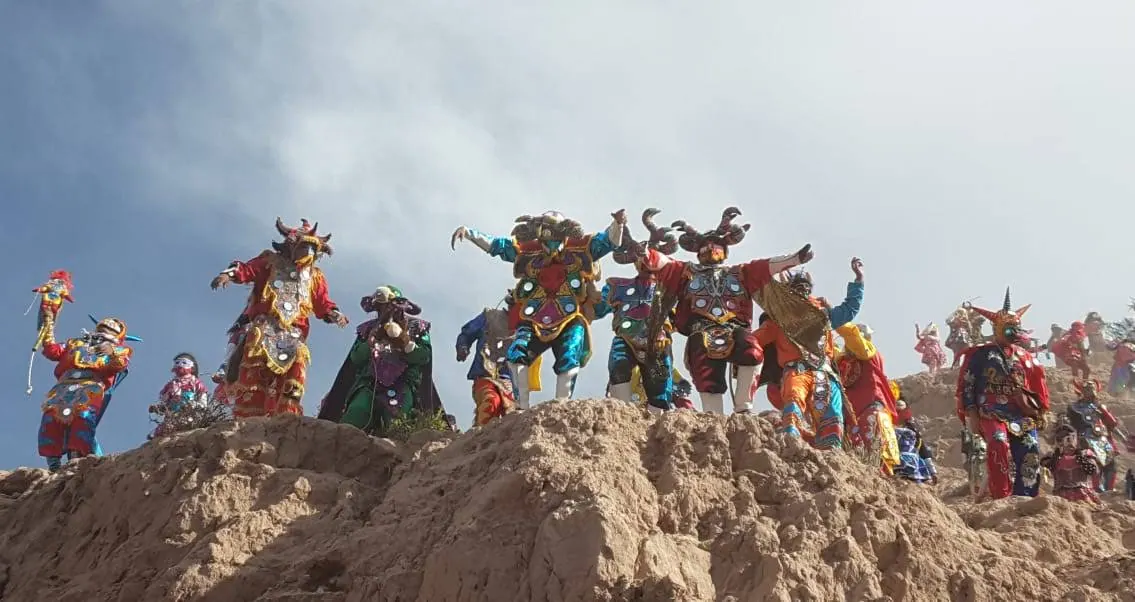
On the opening day of the carnival (22 February in 2020), from around 2pm, once people have recovered from the night before when the celebrating had already started, tens of thousands of people gather in this small village and collect on the open ground behind it at the foot of the mountain. Why? Because at around 5pm the devils, costumed according to local tradition, begin to come down off the mountain, dancing all the way down. The bravest of them roll down, and are received at the bottom with battle roars that quickly turn into a party nobody will forget for the rest of their lives.
The carnival of Jujuy
The city of Jujuy, capital of Jujuy province, holds a celebration from another world during the carnival: a music festival by Los Tekis, the famous band of the northern Argentine province, who know how to take Inca rhythms and turn them into high-energy hits.
The carnival in the city is far more organised than the huge parties in the villages. In Jujuy you’ll find food stalls, bars, toilet facilities and genuinely a happening of an international standard.
Every day during the carnival there’s an afternoon event from midday to 5pm. From 10pm until the small hours, the evening performances take place.
More details on Los Tekis’ site — https://www.lostekis.com.ar/
To sum up, I’d say the combination of the mad, authentic village experience and the Jujuy music festival is the one I’d recommend for an unforgettable carnival.
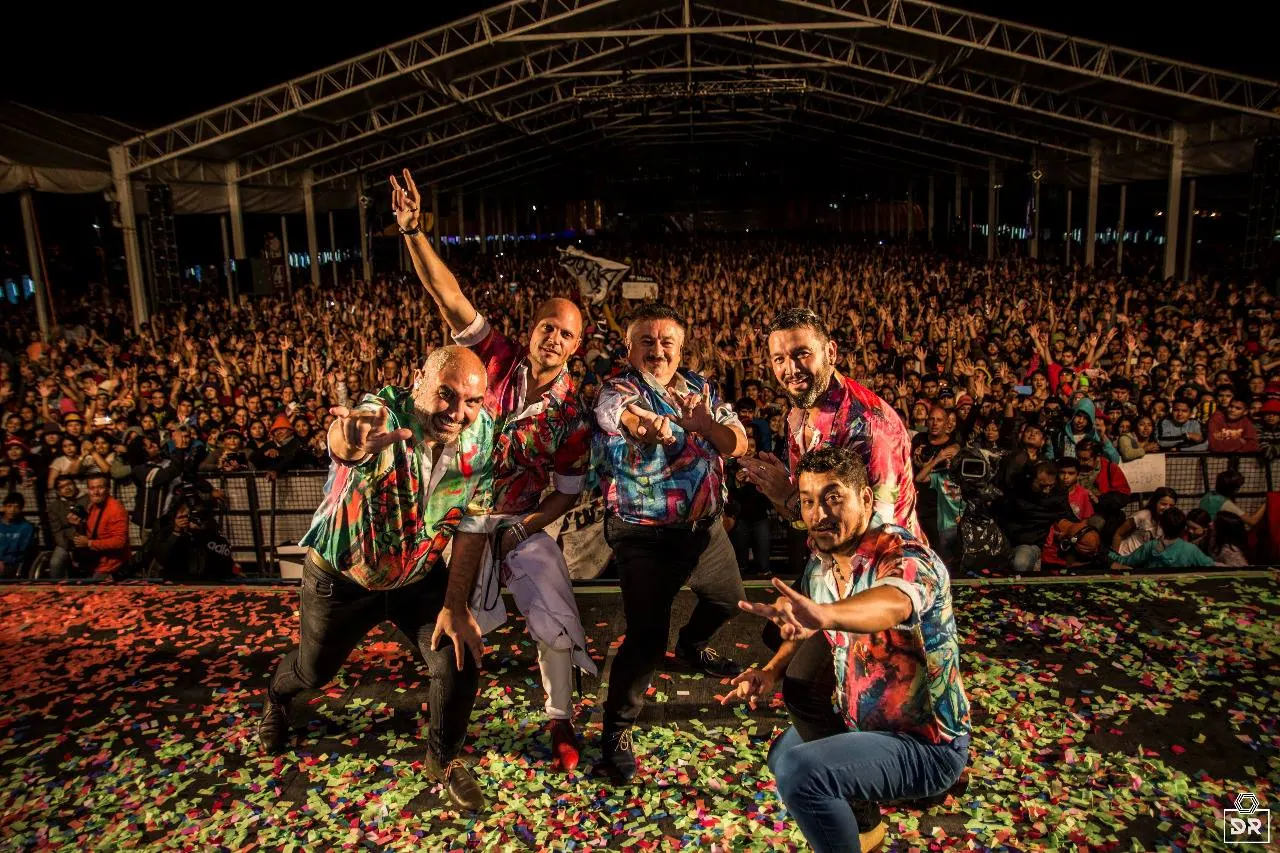
Los Tekis, who organise the music festival in Jujuy.
Accommodation, getting there, and other things worth knowing
Let’s start with the most important thing: during the carnival there are no free beds anywhere. Full stop.
If you have the option to plan ahead and book somewhere, do it.
If you don’t, in the village area you can certainly pitch a tent, and as I mentioned there are also organised camping areas with an excellent young atmosphere.
For staying in Jujuy, definitely try to book ahead. A tent isn’t an option there.
Getting there. Let’s start with what isn’t recommended: hiring a car. Not only is it almost impossible, it’s unnecessary and irresponsible. A big part of the enjoyment of the carnival is drinking the various concoctions Argentines mix for you from every province in the country. Beyond that, picture an innocent single-lane road with one petrol station filling up with tens of thousands of people. The point is clear.
What should you do? Hitchhiking is definitely an excellent and workable option that many people use — responsibly and carefully, of course. There are also extra buses during the carnival. It isn’t really enough, they fill up fast and they’re crowded, but it’s an option.
That’s it, friends. I know it isn’t the easy thing to do, but the readers of my blog definitely need that quality of breaking new ground and going for what’s different — and the carnival of northern Argentina is a good and relatively easy example that delivers an unforgettable experience, one I’d like to see more Israelis have.
FELIZ CARNAVAL