Torres del Paine — A Full, Up-to-Date Guide
No booking, no entry since 2017. Every campsite on the W trek, how to reserve, and what to do when they're full.
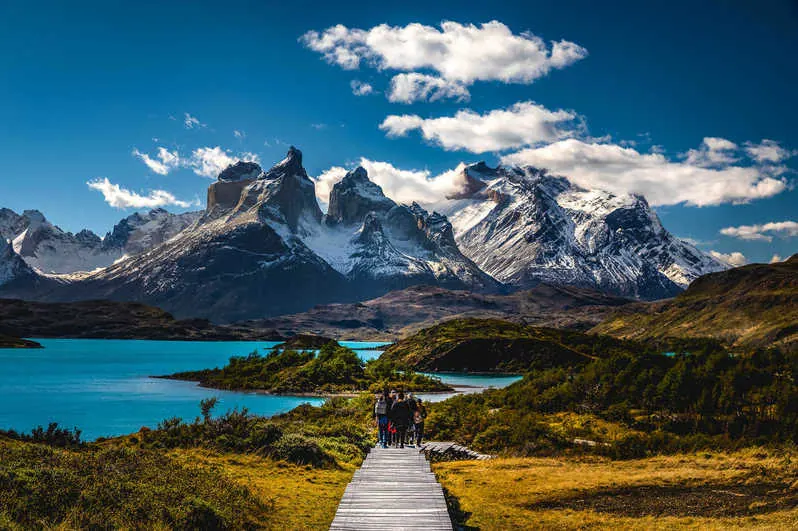
Background
The Torres — Torres del Paine National Park — is a heavily travelled place, not the usual thing for my blog.
But because in recent years you can only enter the park with accommodation booked in advance, and there’s a lot of confusion around it, I decided to put together a complete, up-to-date guide with tips and all the relevant information on one of the most beautiful nature trips in the world.
Booking places — the W trek
The W is the most popular route in Torres del Paine. It takes four to five days depending on your pace — I wouldn’t recommend less. You need to know how to stop and absorb the extraordinary nature you’ll see along the way.
Because of a law that came into force in 2017, booking a place to stay is mandatory in order to enter the park, so advance booking has become something you need to focus on.
In peak season, between December and the start of March, demand is enormous and there aren’t many places, so you need to book even months ahead. I tried booking two months ahead and it was a very complicated business because there were barely any places left. So if you already have partners for the trip, booking accommodation in the Torres is the first priority — build the rest of your Patagonia trip around it.
Map and list of campsites
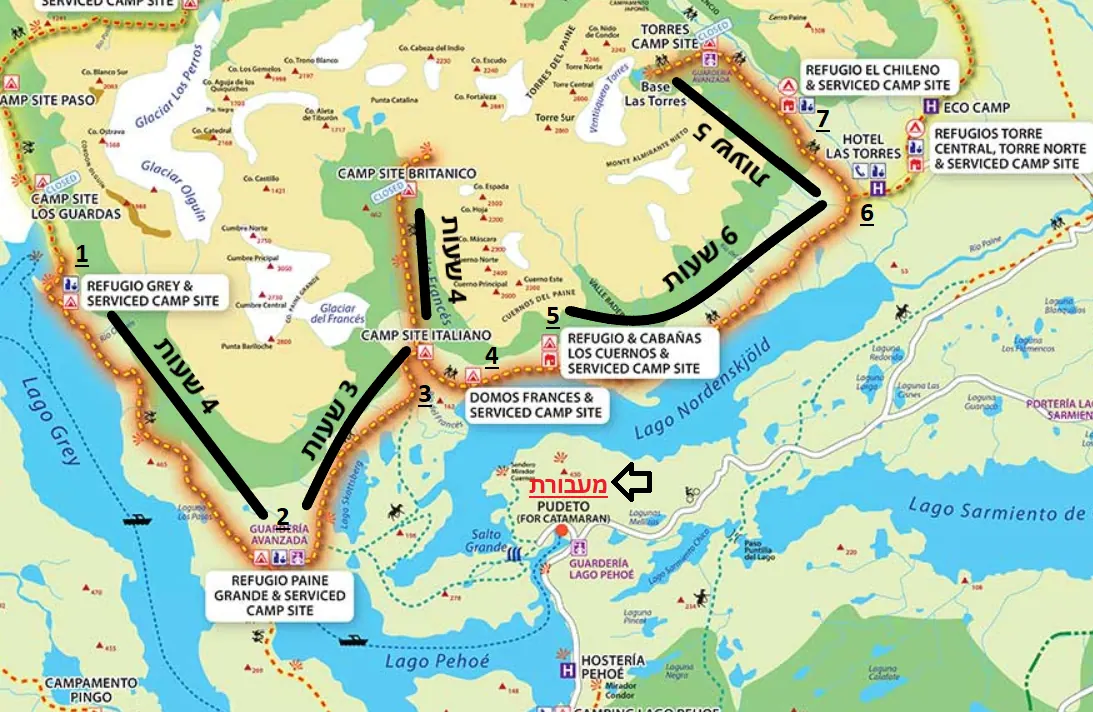
There are two ways to do the W route (explained by the map):
One — right to left, then return by ferry. Two — start with the ferry, arrive on the left side, and finish on the right.
Use this: if there’s no space at one of the campsites, check whether it works doing it the other way round.
I’ve also added to the map the average time I think each section takes (I hiked it with three others).
Campsites by the numbers on the map:
1. Grey. An organised campsite with a small supermarket and a small room where you can cook and wash up. It’s at the left-hand end of the W and gives easy access to the Grey glacier, about an hour’s walk away. Bookings: https://reservas.verticepatagonia.cl/index.xhtml
2. Paine Grande. A large campsite right at the ferry exit. It has (for a charge) a dining room, a supermarket, luggage storage, internet and more. Bookings: https://reservas.verticepatagonia.cl/index.xhtml
3. Italiano. A relatively small campsite where the park rangers also sleep. There are no facilities beyond the basics, but its big advantage is that it’s an excellent launch point for the middle of the W — the Británico viewpoint. Bookings: this is the only one booked through Chile’s national parks authority, so it sometimes doesn’t work or you need to send an email. http://www.parquetorresdelpaine.cl/en/sistema-de-reserva-de-campamentos-1
4. Francés. A small, pleasant campsite with a little shop and, if I remember right, even pizza. Its location is less good than Italiano, but you can certainly set out from it to the middle of the W, the Británico. Bookings: http://int.fantasticosur.com/en/online#!#collapse-5
5. Cuernos. The first thing worth saying, and I learned it the hard way, is that the proportions on the map are not an indication. Cuernos is two hours and even more from Italiano, and on many maps along the way it looks relatively close. From Francés camp there’s a very steep descent, so if you’re planning to climb the middle of the W to the Británico, this isn’t a campsite I’d recommend sleeping at the night before, because it means a steep climb to Italiano and from there a steep climb to the Británico.
The campsite itself is extraordinary. A breathtaking view over a turquoise lake and one of the most beautiful mornings you’ll have on the trip. Beyond that it has a restaurant and a bar with a great atmosphere in the evening, and another room where you can prepare food yourself. Bookings: http://int.fantasticosur.com/en/online#!#collapse-5
6. Central Las Torres. Las Torres is the main launch point for the park’s biggest attraction — the Torres themselves.
The campsite is vast, with every facility at the highest standard, hotels around it, internet, food, a bar and full access to civilisation.
The bus back to Puerto Natales leaves from this campsite.
Because of its size, if you didn’t manage to book ahead you can usually book on site — or, if you have no booking, simply pitch a tent without anyone noticing. (I don’t recommend it, but it’s certainly possible.) Bookings: http://int.fantasticosur.com/en/online#!#collapse-5
7. Chileno. A campsite in a good spot halfway up the climb to the Torres, with a view, on a riverbank, with high-standard facilities including a kiosk and a restaurant. In my view it’s a more convenient option for anyone who wants to reach the Torres at sunrise.
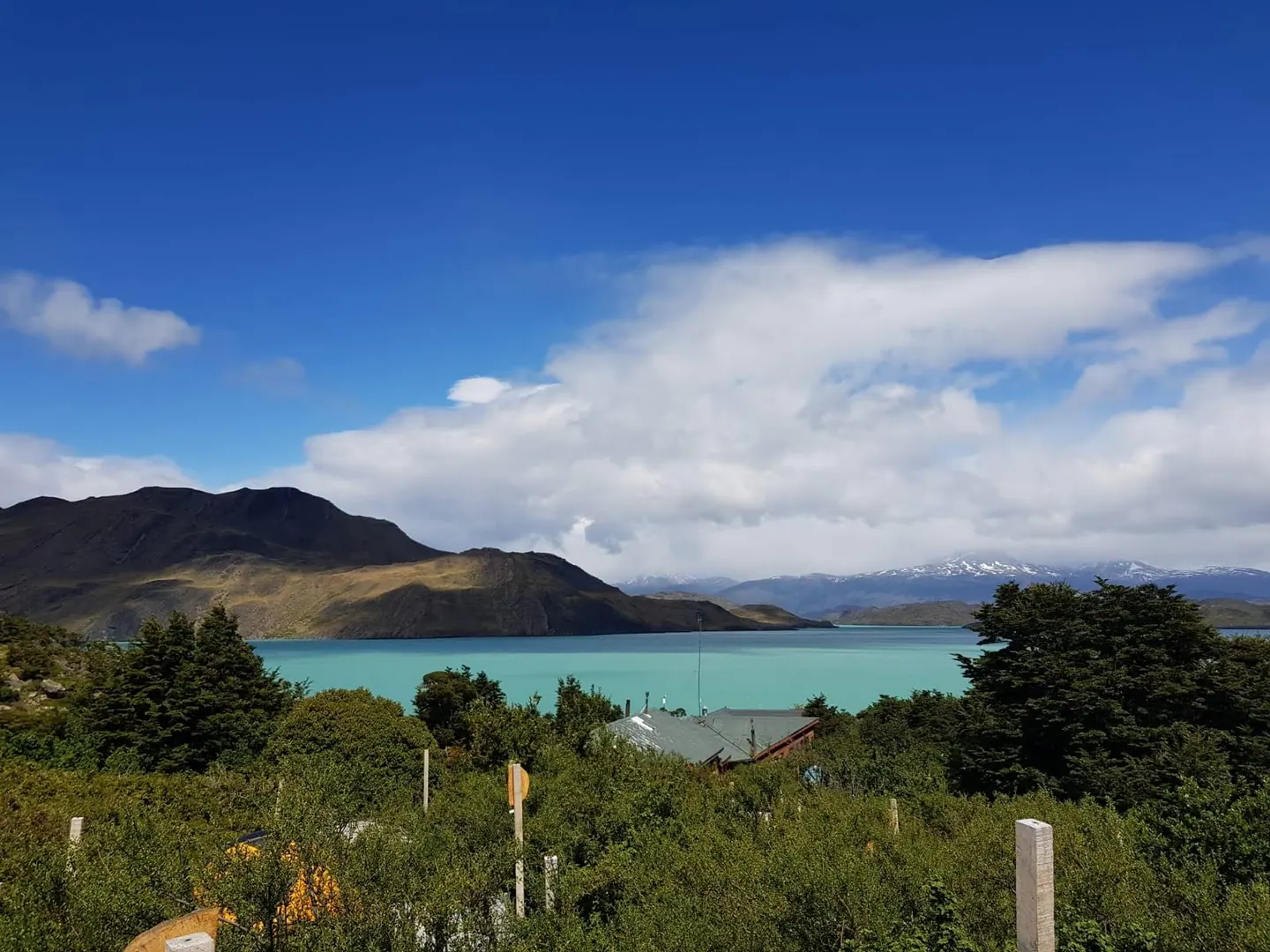
Ferry and timetables
As I mentioned above, you can start the W from the left-hand side, and to do that you need to begin the trip by ferry. Leaving Puerto Natales, make sure your bus isn’t going to the park’s main entrance but stops beforehand at the ferry departure point, called Pudeto.
Bus information and timetables: http://www.parquetorresdelpaine.cl/en/buses-regulares Ferry information and timetables: https://torresdelpaine.com/en/schedule-values-and-information-season-2016-2017/
No places left — what do you do?
All is not lost, friends. Here are a few points worth paying attention to before you give up on visiting this dream park.
Legal and safe ideas:
Try changing dates — don’t be fixed on the days you wanted to go. Try reversing the direction of the trek, right to left or left to right. Remember that the main campsite, Las Torres (number 6), is vast, doesn’t require a booking, and you can manage on the ground. The campsites in the middle of the route are the hardest to get a booking for. If you didn’t manage it, shorten the W and give up the middle — the Británico viewpoint. Talk to agencies in Puerto Natales. It’ll be significantly more expensive, but they hold their own reserved places. Do the trip without sleeping over, going only to the Torres themselves.
Ideas that are neither legal nor safe, but are possible:
Get a booking for only some of the days and try to pitch a tent on the ground without one, or buy places. I saw people do this — be prepared to pay a lot. Take someone else’s booking and change the name in Photoshop.
General tips for visiting the park
Food. The Torres trip is a multi-day trek, so you need to prepare accordingly on food. As I mentioned above, in the overwhelming majority of places there’s somewhere to eat or buy something in a shop, but it’s expensive. Very, very expensive.
On the other hand there’s the question of the weight in the pack you’re carrying for several days.
My recommendation is to come organised with everything around the food — spices, soups and snacks for the whole trip — and for heavy things like rice and pasta that you want to cook in the field, bring enough for part of the trip and then top up at the kiosks.
Drinking water isn’t a big issue: the water in all the streams in the reserve is clean and drinkable.
As for cooking, at all the campsites you cook with your own full kit, so come prepared with a gas stove, gas, pots, cutlery and plates.
Gear. In the Torres you need to be ready for any weather. The nights are always cold, and during the day it depends on luck — it can certainly be warm.
In planning the trip, remember that all the hard climbs — which are essentially the ascents from the base of the W up to the top points (Grey, Británico and the Torres) — don’t need to be done with all your gear. You leave everything at the campsite and set out with just a daypack, which makes it significantly easier.