The Salar by Self-Drive
Hire a jeep and cross southern Bolivia yourself instead of joining a tour. The car, the kit, the day-by-day route.
Background
The Salar de Uyuni, the largest salt flat in the world and one of the most spectacular landscapes on the globe, especially when it comes to travelling in South America. You’ve seen the Instagram photos more than once, I’m sure, and you’ve heard the stories. But the visit to the salt flat is only the peak of a two- to three-day trip through the desert region of southern Bolivia — a wild area full of extraordinary landscapes: geysers, red, yellow and turquoise lagoons, hot springs, and snow-capped mountains in the background.
Most of this beauty can be experienced through guided tours leaving from the town of Uyuni. It’s convenient, it isn’t especially expensive, and it’s certainly an experience.
But let me tell you in this guide about another option — one which, beyond including a section that the tours don’t reach, gives you complete freedom and independence to genuinely enjoy and absorb these unique landscapes to the full, with no timetable and no route dictated in advance.
Hire a jeep and do it yourselves. Yes, it’s possible. It isn’t easy and it doesn’t suit everyone, but in this guide I’ll give you all the information you need to turn that dream into reality — a dream in which you’re sailing through the untouched nature of southern Bolivia on your own.
This guide has a road story that tells the experience from a personal point of view: Salt, Water and a Lot of Oil.
There’s also another guide in English on the subject — https://southamericabackpacker.com/can-you-rent-a-car-explore-the-salt-flats-of-bolivia-independently-without-a-tour/
Preparing to leave
Let’s start with the first and most important thing on this journey: your vehicle.
All the preparations, including hiring the car, can only be done properly in one place — Sucre, the capital of Bolivia. Yes, that’s not a mistake: you begin the preparations 350km from Uyuni.
In Sucre there are two main options for hiring a car:
Sud Americana Rent A Car. A large, standard car hire company, but the only one that functions properly in Bolivia. They have a big fleet at more comfortable prices than their competitor Biz, but on paper this is a company that doesn’t allow renters to take the car to the salt flat and has you sign a contract saying you won’t. Because of that they’re also less flexible about requirements for extra equipment — but again, they’re cheaper. https://goo.gl/maps/e4ssUv69ndKYwc4k8
Biz Rent A Car. A small, family-run hire company whose big advantage is that it offers jeep hire packages for the salt flat. They know the challenging routes, they prepare the vehicles accordingly, and they give you extra equipment that lets you set off with a clear head. More expensive than the competition, but definitely the safe and correct choice for an adventure like this. https://goo.gl/maps/WYD9CRmZwEK3ZMUn8
Whichever company you decide to go with, here are the things you absolutely must have in the vehicle. No games — these are essential.
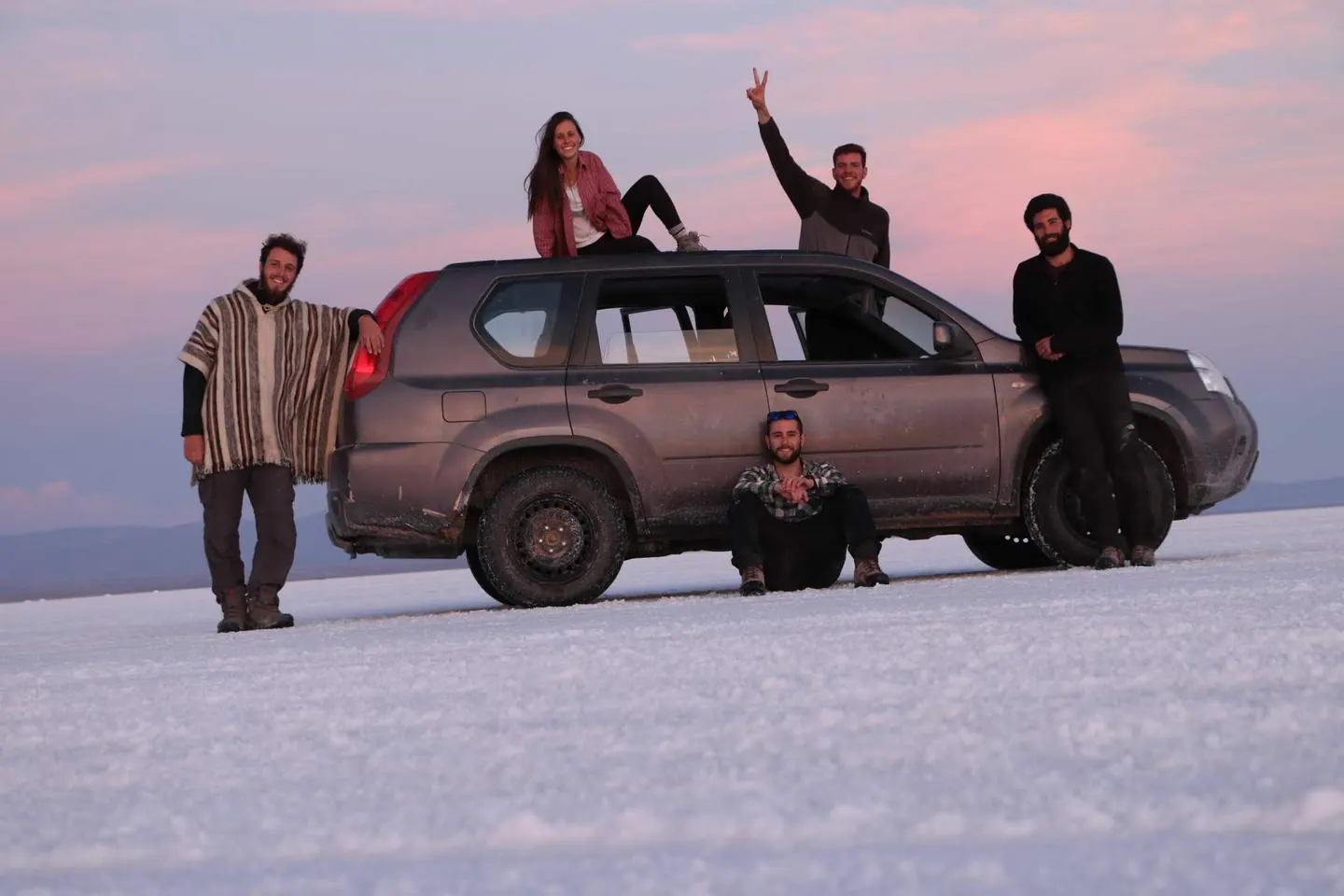
It has to be a jeep, with four-wheel drive and high clearance. A Suzuki Jimny for a small group or a couple. A Toyota Hilux for a medium group. A Nissan Patrol for a large group. We went out with a Nissan X-Trail and five people, and the car came back with a lot of damage.
A 40-litre fuel jerrycan on top of the vehicle’s tank Two spare wheels Engine oil for changing Wheel-changing equipment, and check that it fits The vehicle’s documents and insurance Try to squeeze as many included kilometres as possible into the price you agree
We have a vehicle. On with the preparations.
The average trip takes three to five days (not counting a day each way from Sucre to Uyuni), and for a large part of that you’re going to be far from normal civilisation, so you need to prepare properly — much like for a trek.
The recommended place, the cheapest and most varied, where you can buy everything in abundance and quickly, is the local market in Sucre. Many people think that’s the market by the main square — it isn’t, that’s the tourist market.
The main market is a ten-minute drive from the centre and is called Mercado Campesino.
Mercado Campesino is a market the size of a neighbourhood. Every street specialises in a different field and you can get everything there cheaply, but to work efficiently you need to prepare a list in advance and consult the staff at your hostel, who’ll point you to the streets where you’ll find what you need.
So what do you need?
Food — things that are easy to cook like rice and pasta, ready-made soups, sweets, spices, cooking equipment.
Water — a great deal of it. There’s good water along the way but you won’t always find it. Set off with plenty.
Alcohol. At the market you’ll find a varied and authentic range at prices you can only dream of, and there’s nothing like finishing a long day with a singani, the Bolivian spirit.
Clothing. Temperatures depend on the season, of course, but bring clothes as you would for a trek — shorts for the days, long and warm layers for the nights. Also bring gear like gloves, a neck warmer and anything else that can keep you warm in a freezing desert.
Money. Prices along the way will be laughable, but I’d recommend setting off with a decent sum for any eventuality.
A SIM card. Disconnecting matters, but you need a SIM for emergencies — and only from Entel.
Medical supplies and oxygen. The trip passes through altitudes above 4,000 metres and is far from any medical help for part of the time. Bring medication and bandages, and in addition there are small oxygen bottles called oxy shots, available at pharmacies at a reasonable price. Ask the pharmacist to explain them — if you need them, they can be very useful.
That’s it, friends, we’re ready to hit the road. Remember, this is Bolivia: however prepared you were, it will surprise you.
Recommended route
I’ll set out here the route I did, which in my view is the one to take: it covers all the beautiful things the region has to offer, ordered by the intensity of the experiences and easing you into the terrain gradually.
But it’s important to say here: you’ve put in the work and made the effort organising this, so the freedom is yours. You can change the order or do other things. Feel free to stop in remote villages, and let the landscape take you to places that aren’t listed here.
Day 1 — Sucre to Uyuni
On the first day you need to load all the equipment onto the vehicle during the morning and set off at a reasonable hour towards Uyuni.
If there’s time, to break up the long drive I’d recommend stopping for a short look around the pleasant city of Potosí.
You arrive in Uyuni, settle into a good hostel, and above all eat and sleep well before the real departure.
Day 2 — Uyuni to Tupiza
Leave Uyuni early in the morning (9am at the latest), fill up with fuel and top up the spare jerrycan, and take Route 21 towards the town of Tupiza. A drive of roughly three to four hours, mostly on paved road, passing through fairly remote areas.
When you reach Tupiza, if you’ve arrived at a reasonable hour (before 3pm), I’d recommend going out to visit the desert canyons right on the edge of town: Cañón del Inca, Puerta del Diablo and Valle de los Machos. They’re all the same place.
A recommended place to sleep in Tupiza is Bien Te Fue, a comfortable family hostel.
Day 3 — Tupiza to San Pablo de Lípez
Leave Tupiza early in the morning, fill up with fuel, and start moving into the real terrain.
The only way to find your bearings on these tracks is with the Maps.me app. Start navigating from Tupiza in the app and set San Pablo de Lípez as your destination.
During this day you’ll pass between small, barely inhabited villages, extraordinary mountain and rock landscapes, plenty of alpacas living undisturbed in the wild — and you’ll discover a region that no tourist on the guided tours ever sees, an area called Sud Lípez.
Towards evening, and ideally before dark, you reach the destination: San Pablo de Lípez, a tiny but inhabited village, with an impressive football pitch given how isolated it is. The village has a little food, a church, and two guesthouses that will give you a bed and a kitchen to cook in.
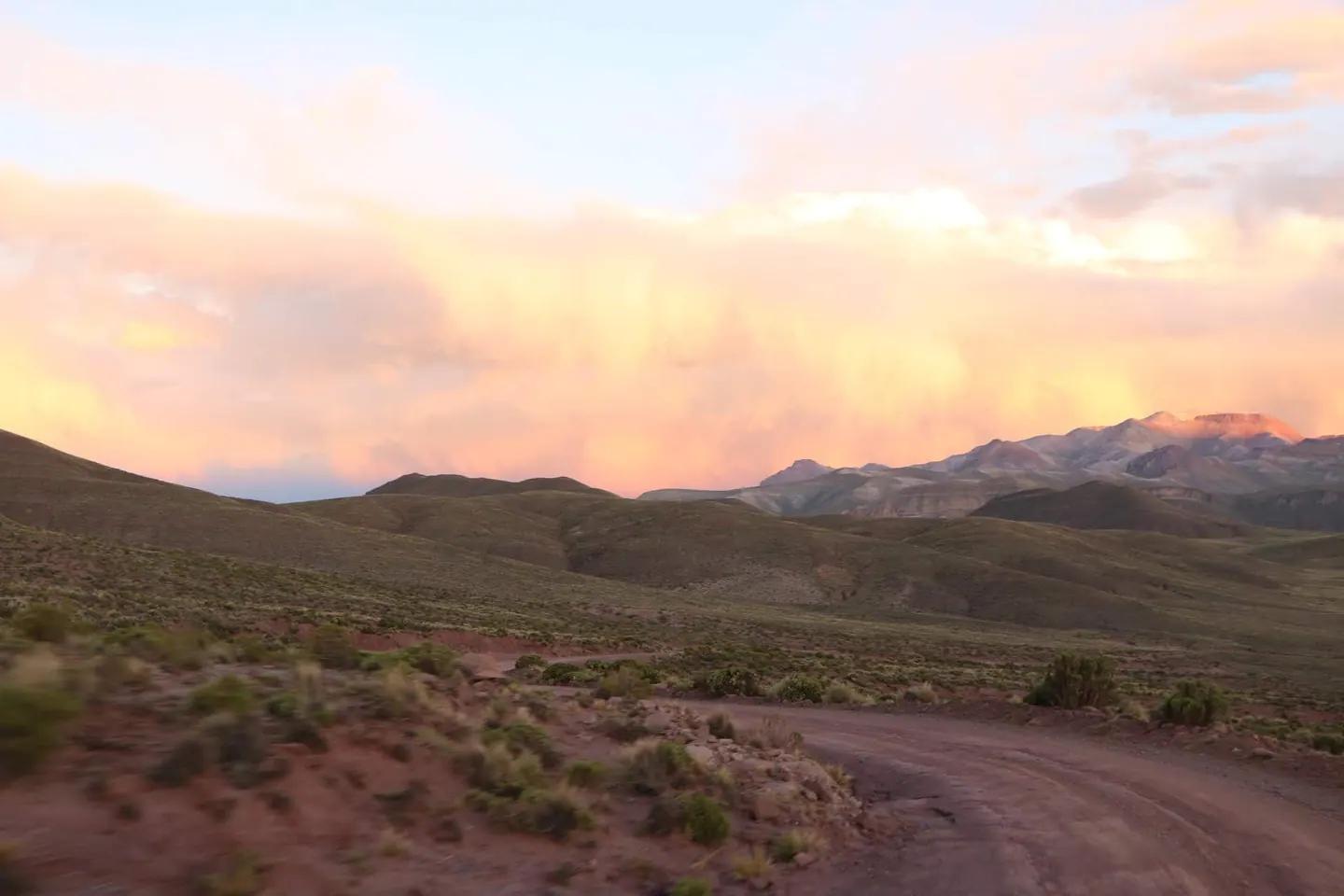
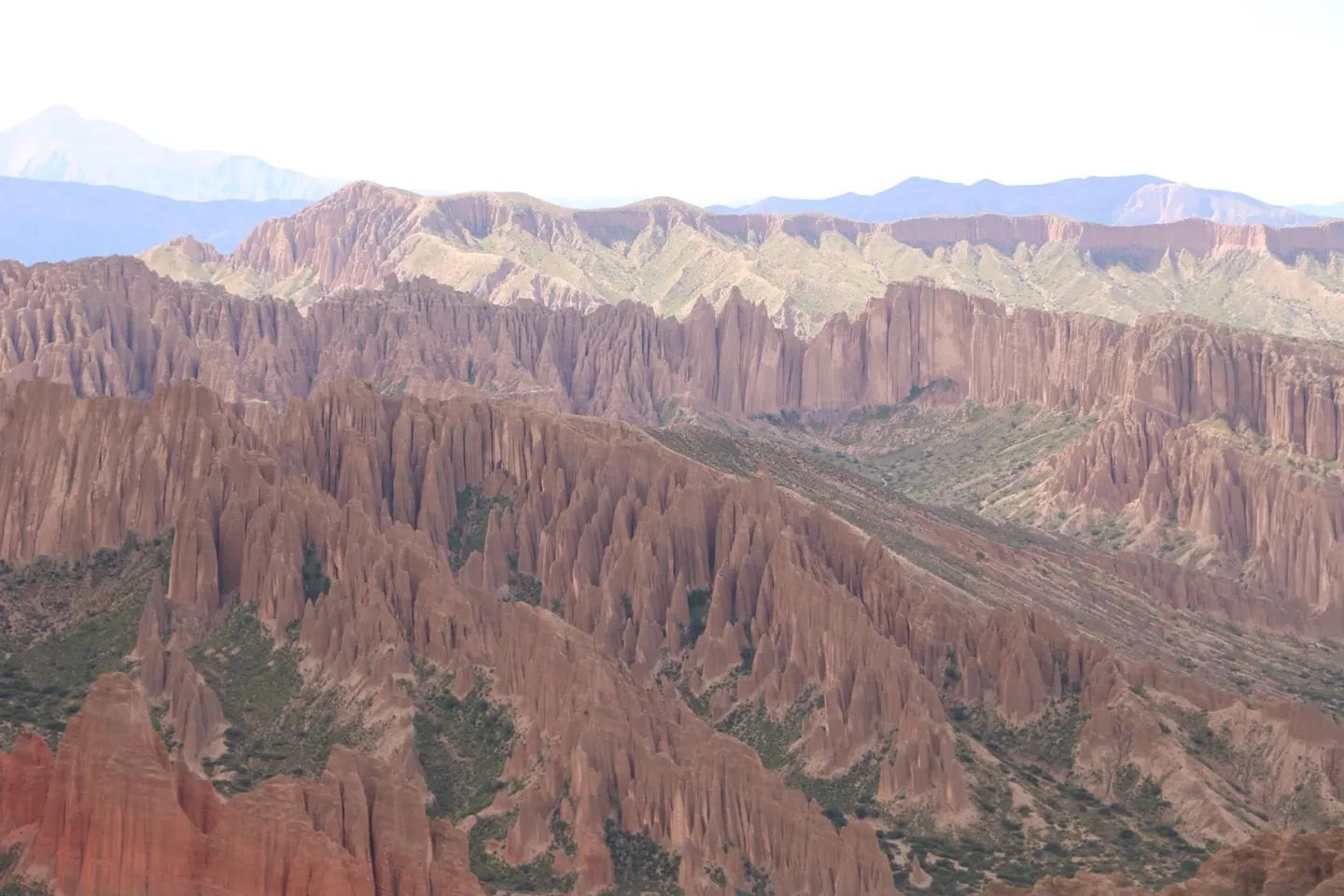
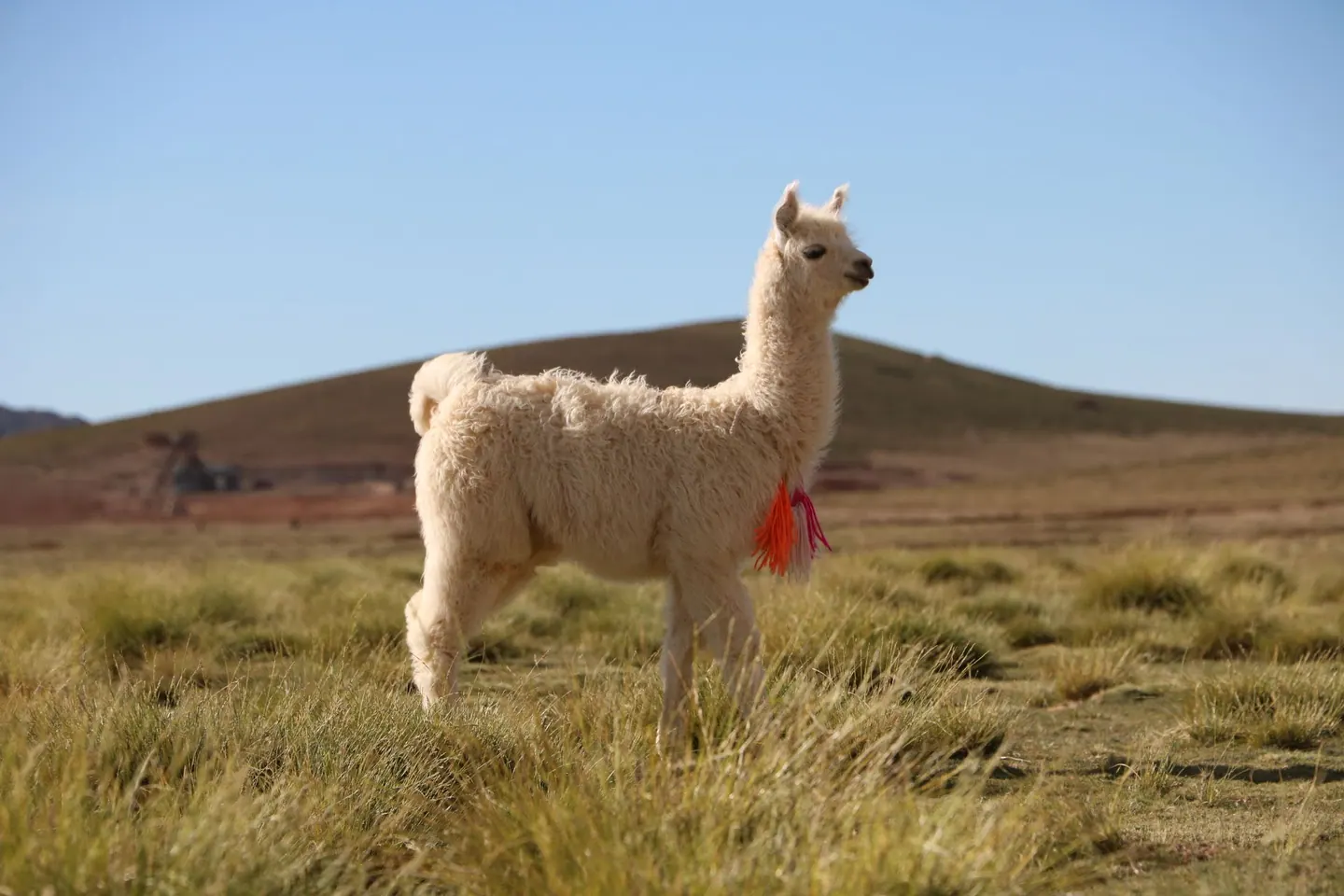
Leaving the town for untouched country.
Day 4 — San Pablo de Lípez to Termas de Polques
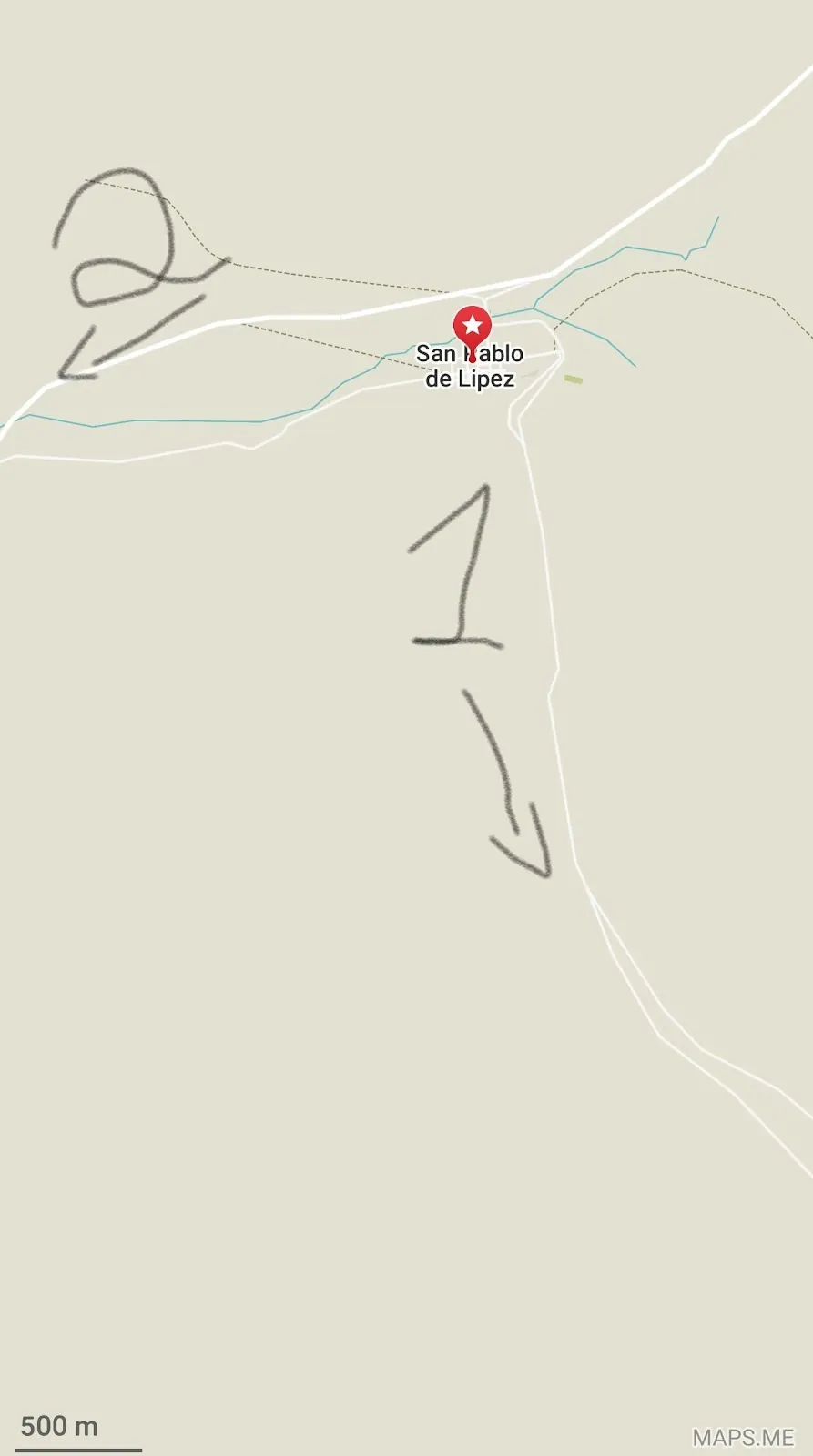
You leave the village in the morning, and here you have two options, both of which lead to the same destination.
If you have time and good energy, let’s carry on along the special route to the lagoons of Sud Lípez.
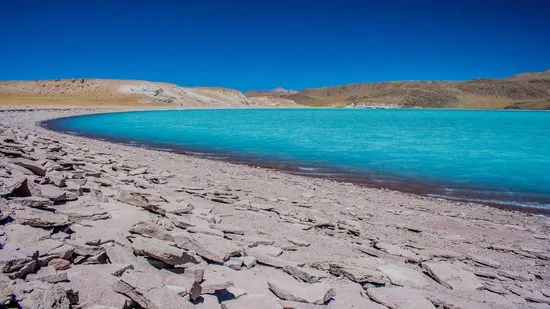
On this route we leave to the south of the village (number 1 on the map) and join a secondary track along which dozens of lagoons appear as you go, among them the Yellow Lagoon (Amarilla), the White (Blanca), and towards the end of the road the most beautiful of them all, the turquoise Laguna Celeste. This route also passes a few very remote villages. You can try talking to the people there — they ran an empanada-making workshop for us and sold us warm, good-quality clothing cheaply. (You can read more in the road story.)
The second option is to carry on along the main track and reach the final destination in about five hours, and start doing some of tomorrow’s attractions already. If someone isn’t feeling well, if the vehicle isn’t in ideal condition, if you’re short of time or anything of that kind, take this route (number 2 on the map).
At the end of both tracks we eventually arrive at a village called Quetena Chico. From there we take the track heading west, which after a short time joins the main road on the map, the orange road.
On the way to the orange road we pass the national park’s border control, where you pay a 150-peso entrance fee. From the moment you enter the park you can breathe deeply: the hard and challenging part is behind you. The park is a protected area and here you’ll start seeing the attractions all the tourists pass through.
After entering the park, carry on to today’s final destination, the hot springs at Termas de Polques. Opposite the springs there are several guesthouses where you’ll already see plenty of travellers, some of them Israelis. Tell them proudly what you’ve been through, and enjoy the fact that you’re on a free timetable. Finish the day with a soak in the hot spring and watch the stars, which are superbly visible in the middle of the desert with almost no lights.
Day 5 — Termas de Polques to Uyuni
Yes, today’s final destination is Uyuni. We’re going back to civilisation.
I’d recommend starting this day earlier than usual and getting up to watch the sunrise at the hot spring, with flamingos in front of the rising sun.
After that you set off again and visit the main sites in the park. I’ll mention four. They really aren’t all essential — see how you’re doing for time, morale and physical condition.
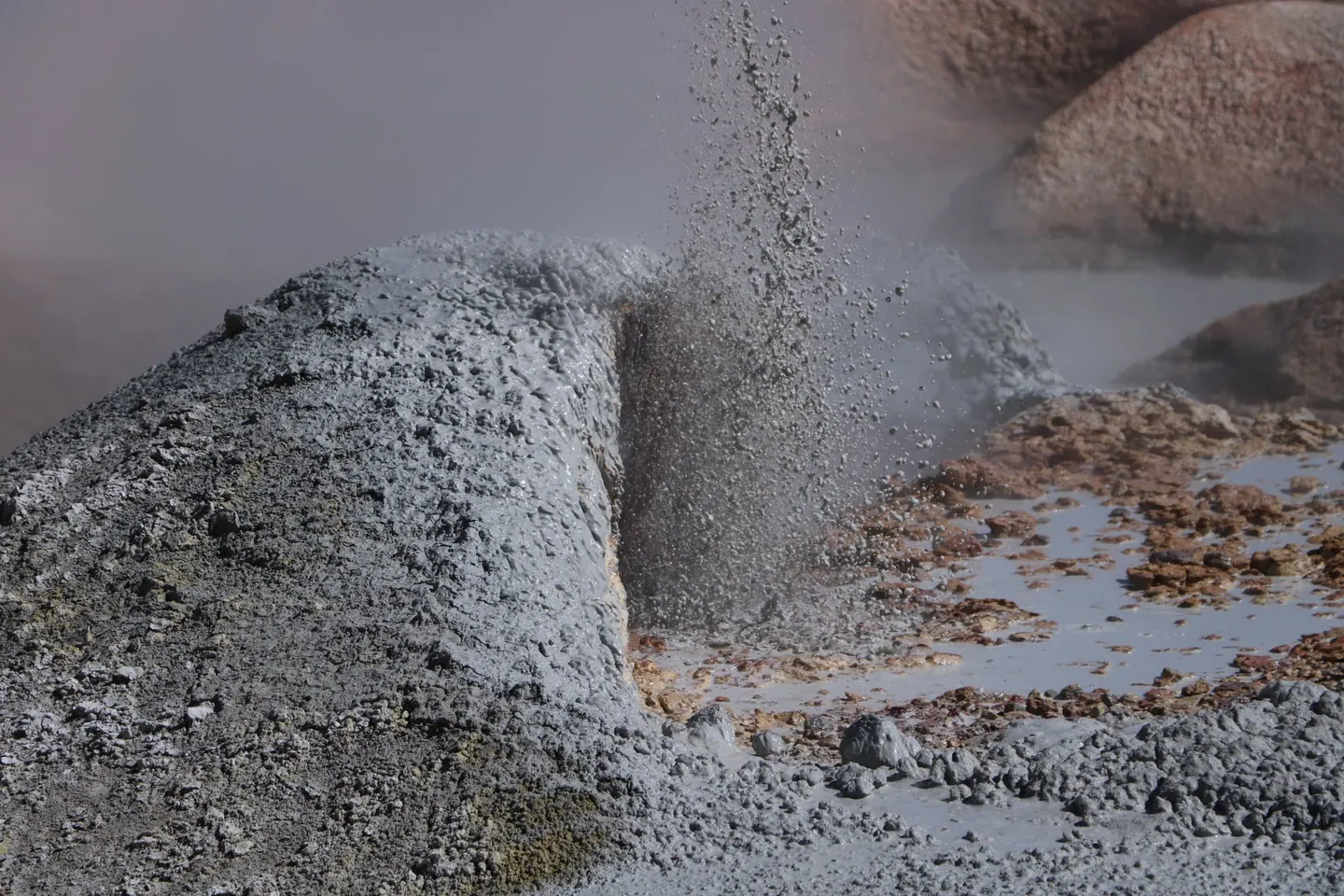
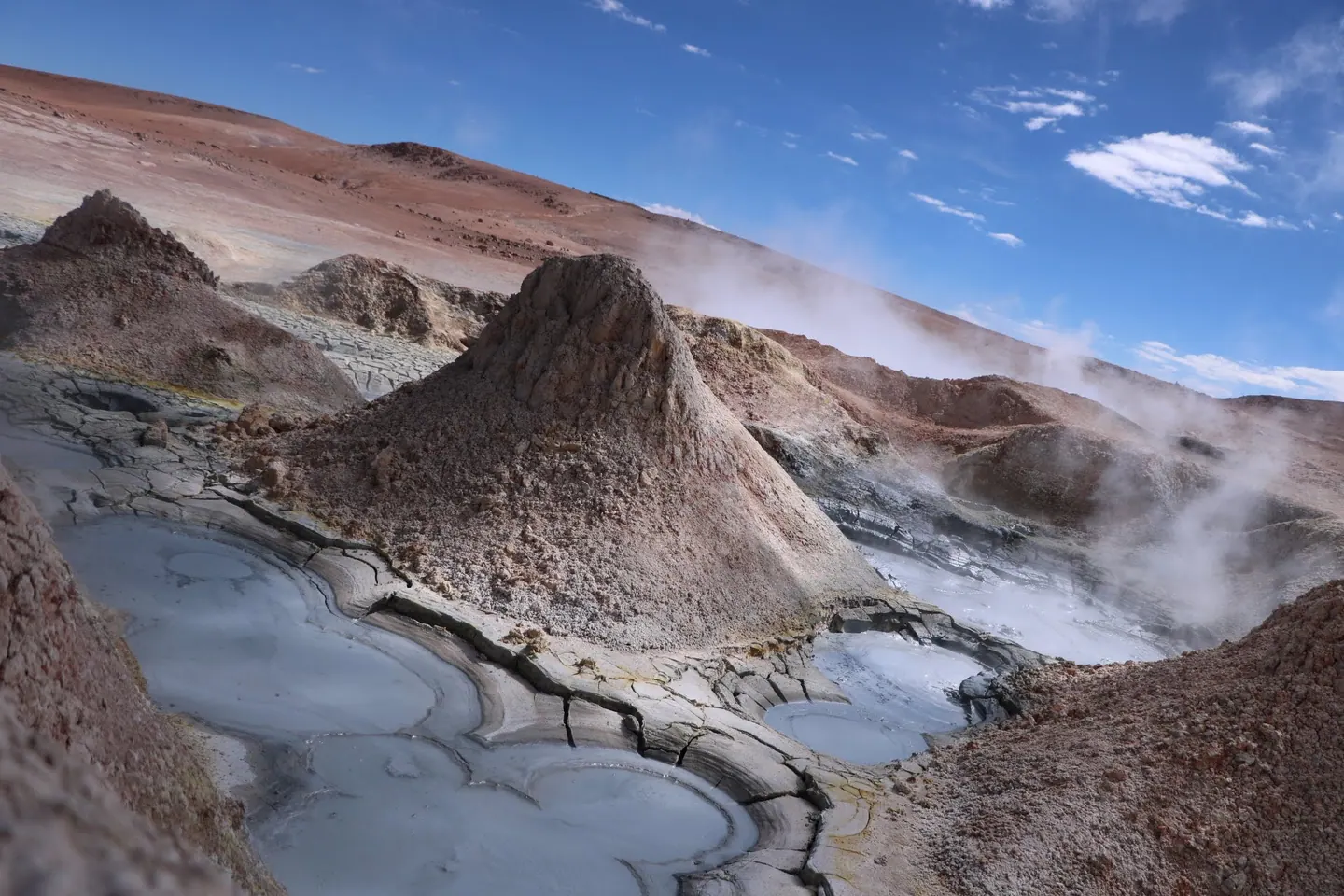
The geysers (Sol de Mañana). Impressive geysers, and perhaps the only thing in the park I’d say is essential. Very distinctive and worth it. Note there’s also a village with a similar name — ask the tours, they all go to these geysers.
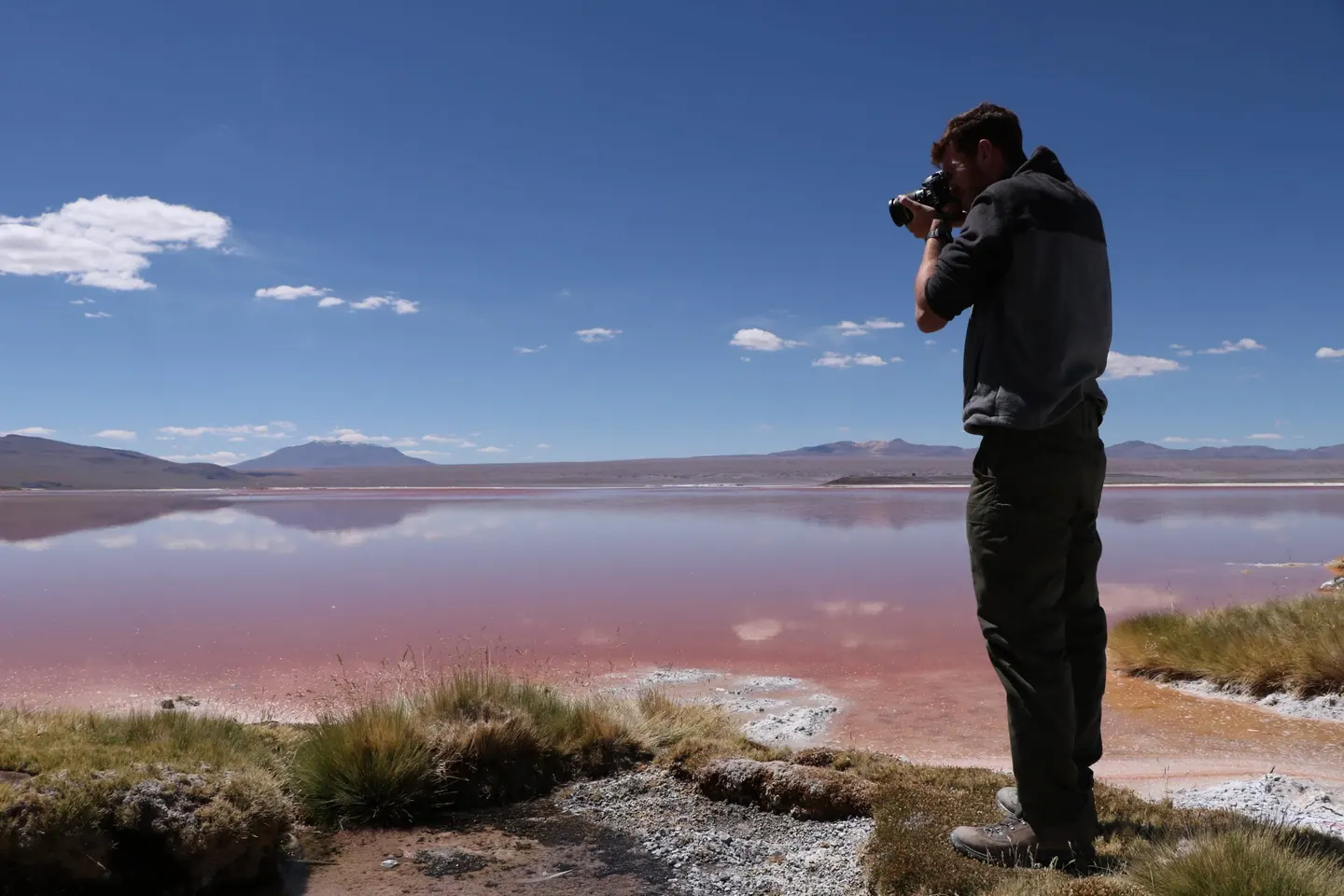
Laguna Colorada. A red lagoon with plenty of pink flamingos. A beautiful place and recommended.
Laguna Blanca and Laguna Verde. Two adjacent lagoons at the southern end of the park, a stone’s throw from Chile. Very beautiful lagoons with snow-capped mountains behind them — but it’s worth noting that it’s a long drive to reach them, and if you passed other lagoons on the way it isn’t essential.
Árbol de Piedra, the stone tree. A large block of rock which the winds have shaped over the years into the form of a flower. A nice, creative idea by the Bolivians to draw tourists. The road there isn’t easy for a jeep, and I’d recommend making do with Google Images.
After a few hours in the park we set off on a four- to five-hour drive towards Uyuni. You arrive in Uyuni towards evening and return to routine: a hostel, proper internet — and how could we do without good food? I’d recommend treating yourself at the excellent pizzeria Doña Isabella.
Day 6 — the Salar and the train cemetery
On the sixth day the main attraction is the visit to the salt flat, the Salar de Uyuni.
The two best times are sunrise or sunset, or even both together. In total it’s a half-hour drive from the town of Uyuni — nothing that should trouble you after the journeys of the last few days.
When you arrive at the Salar at those times you’ll see all the tourists’ jeeps in convoys. Follow the tracks they leave and drive after them. Driving on the Salar is enjoyable and easy — don’t turn it into a towing adventure. Enjoy the freedom to drive as much as you want in your own jeep without being tied to guides, but on the other hand remember this is a salt flat with water beneath it, and you don’t want to end up in unpleasant situations.
Beyond the salt flat visit there’s a pleasant attraction on the edge of Uyuni called the train cemetery. A very nice place to spend an hour or to break out some supplies, easily reached independently in the jeep.
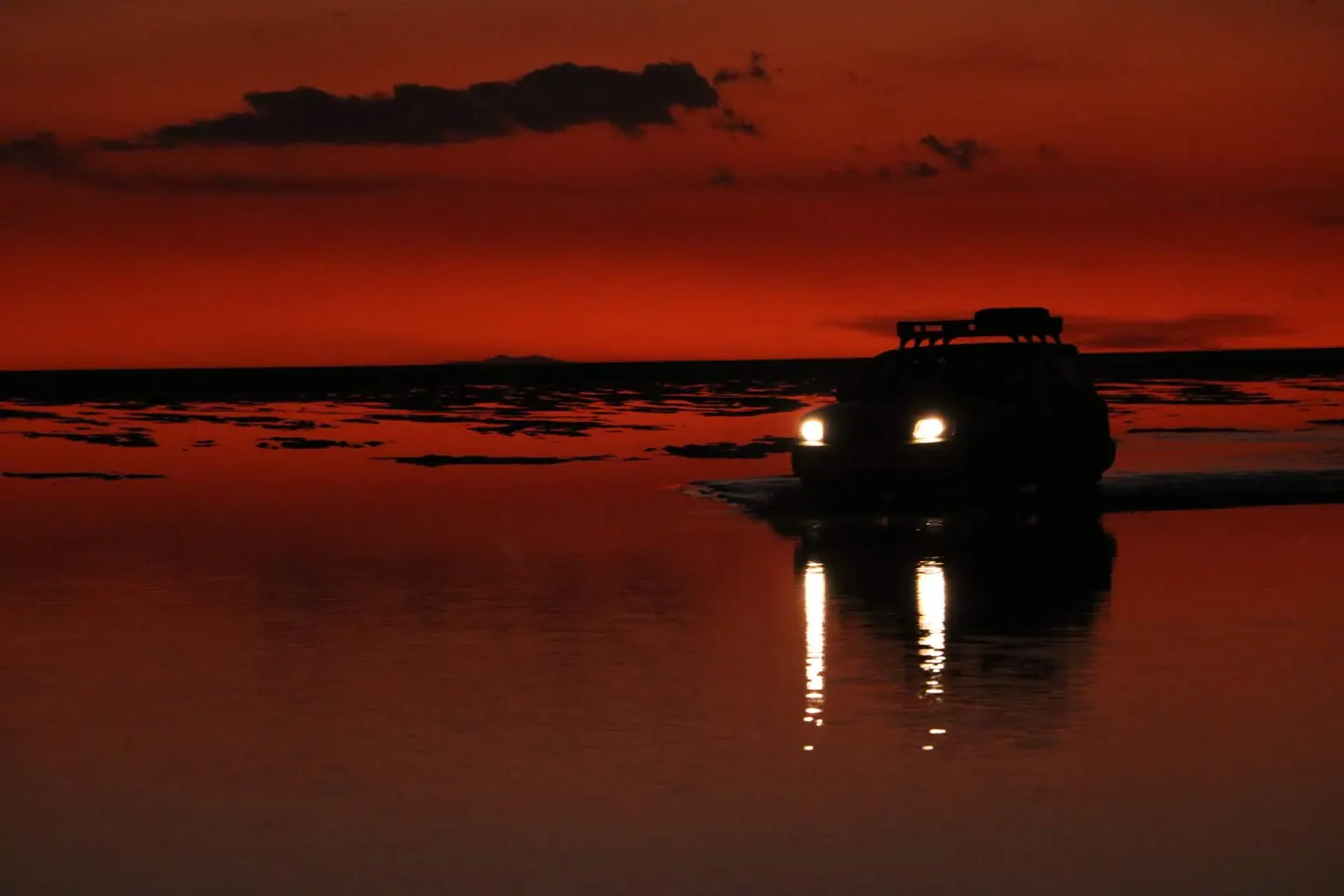
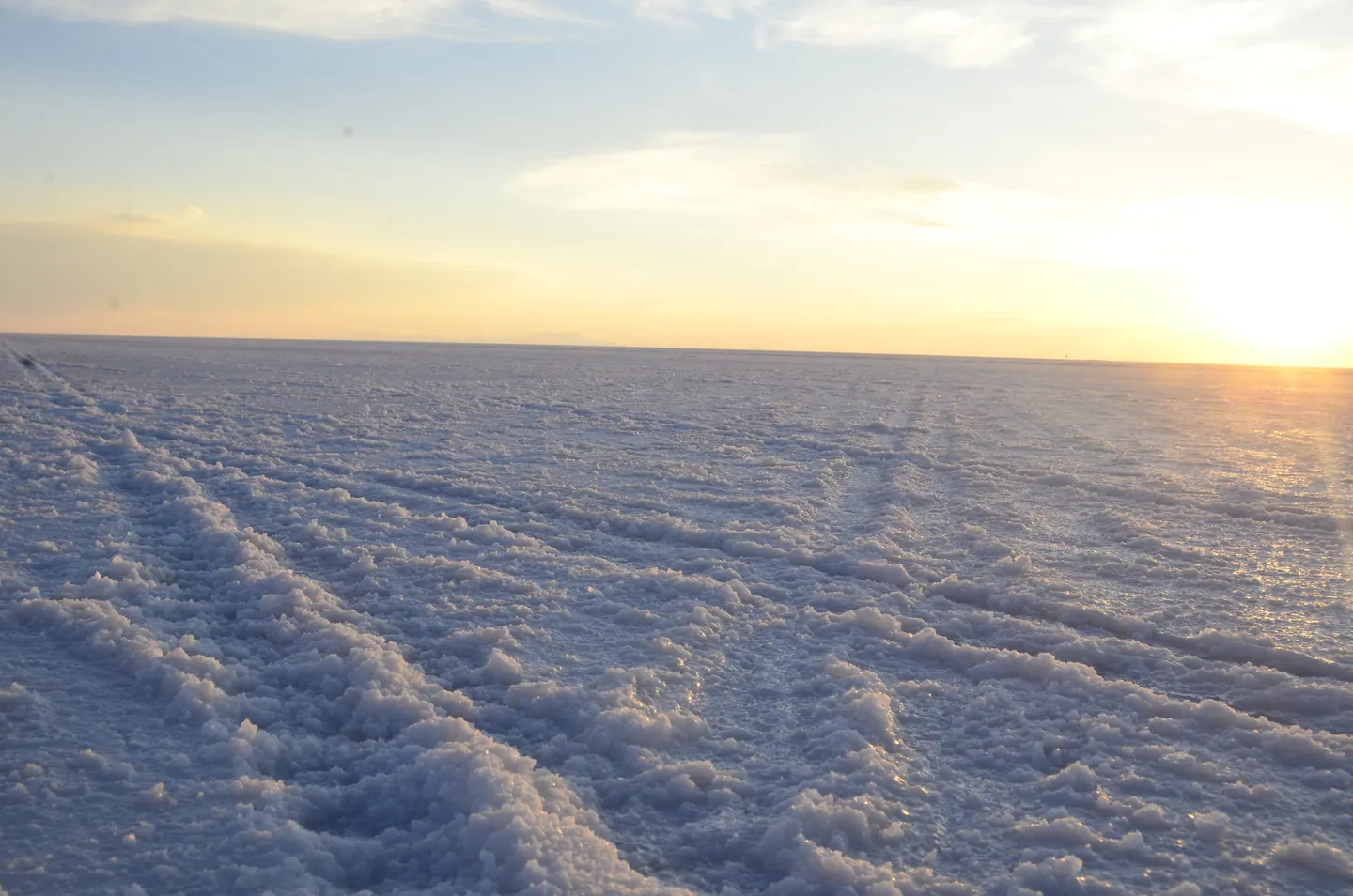
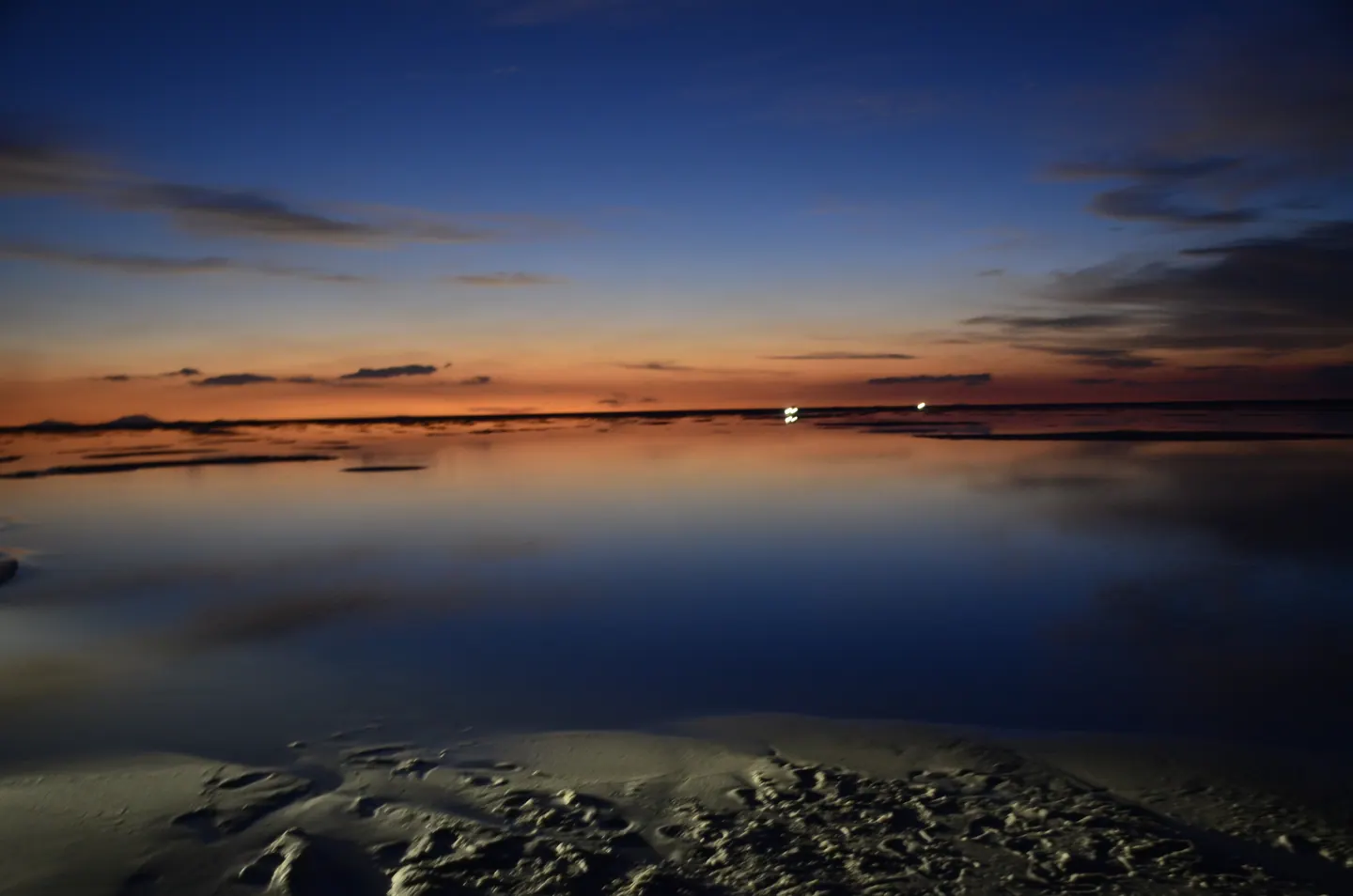
In case you somehow missed it — the Salar de Uyuni.
Day 7 — Uyuni to Sucre
On the seventh day you drive back towards Sucre. If you didn’t manage it on the way out and you have the energy, you can stop in Potosí along the way. You arrive in Sucre, return the vehicle, and that’s it, friends — the adventure is complete.
As I mentioned at the start of the route description, there are plenty of points you can shorten, like the day you leave San Pablo de Lípez, or the day visiting the park, and you can easily bring it down to six days.